The Race

I was about to leave for office when a flurry of emails landed in my inbox with the precision of an air strike. My heart sank as I briefly glanced at the subject matter. A launch of a new product is underway. Last-minute jitters. Doubts. Ego battles – why designation XYZ’s suggestion wasn’t incorporated in the communication. Well, Sir, because it made as much sense as civet droppings without coffee beans in it. Of course, the previous sentence existed only as a thought blurb. So yes. It was going to one of those dreaded days. Full of misplaced rage and carefully worded pleas for reworking the entire ad campaign.

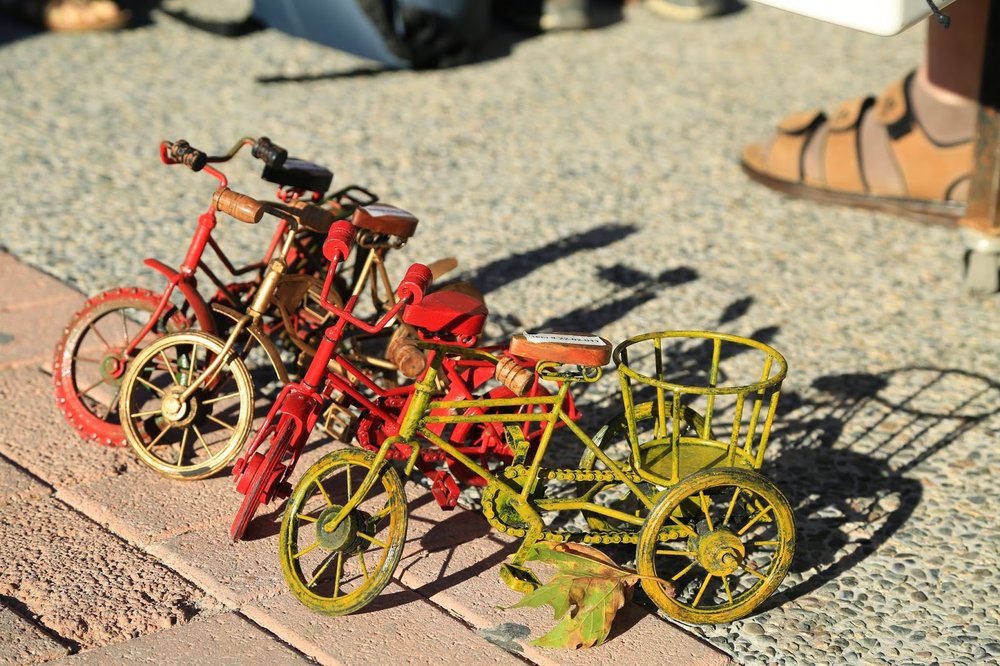
I stepped out of the house and headed to my car. A little boy, about 5 years old, had parked his tricycle beside my car and was petting a cat oblivious to the world. As I got into the car, he drew himself up to his full height of 40 inches or so. The moment I switched on the ignition, he started pedaling away furiously. I drove as slowly as I could ensuring there was enough distance between us. Our little cyclist meanwhile had reached the community gate beyond which he was obviously not allowed to venture out. As I slowly passed him, I told him 'Your cycle is faster than my car'. I could almost see his tiny chest swell up in pride. He waved out merrily, smiling broadly all the time.

Suddenly, the day ahead didn’t seem to matter any longer. Long live innocence.

A Journey Between Two Capes

‘So, we are going to the Cape of Good Hope?’ I asked Scott, our designated chaperone, a burly Zimbabwean. A bit distracted, he replied ‘Yes. We are heading to Cape Point. We are taking the circular route.’ I got a bit confused and seeing Scott trying to maneuver our car between two directionally challenged drivers, I decided not to bother him. Instead, I opened a guidebook. And everything became clear.

Table Mountain dwarfs everything else in Cape Town. However, what many visitors are not aware of (or maybe, I was the exception), that Table Mountain is a world heritage site that extends all the way from the iconic Signal Hill in the north to Cape Point in the south. If one so desires, one can even trek all the way.
Table Mountain always stands tall.
It takes about five days. That’s five days of trekking through magnificent valleys, glistening bays and windswept beaches with some of the planet’s most diverse flora and fauna for company. Cape Point is part of the Cape peninsula that consists of the Cape of Good Hope too. It sounds simple once one knows the details. So, yes, we were heading to the Cape peninsula where we’d take the funicular to the Cape Point lighthouse and look out to Antarctica and after that head down to the Cape of Good Hope, located just a few minutes drive away. And we are taking a circular route that starts from Cape Town, a distance of almost 150 kilometres.  

Kalk Bay on the M4 highway.
Scenic and dramatic. Two words that describe the M4 coastal route to Cape Point best. Here’s a rider though. It’s a 90-minute drive from Cape Town only if you have the steely determination of Wall Street bankers obsessed with their year-end bonuses. However, if you are blessed with the soul of an explorer, you’ll find that time expands to give you the opportunity to explore the pretty towns and atmospheric fishing villages dotting the coast. All with singularly attractive names – Kalk Bay (great seafood restaurants), Simons Town (naval base), False Bay (whale-spotting opportunities), Muizenberg (magnificent waves), etc.  Dip a toe in one of the many beaches where the surf pounds relentlessly. Or, crack open a couple of cold ones in a restaurant while you wait for the daily catch to arrive at your table, grilled, steamed or fried. And then maybe grab a sundae while peering intelligently at fishing paraphernalia at bait and tackle outlets. Look out for the exit sign though. If they recognize you as an imposter, for all you know, you might end up as shark bait.

I found Scott, a fount of trivia, to be a much better option than the guidebook. I always feel queasy reading while travelling by road. Also, it was much easier to gawk at the passing scenery and pepper him with questions instead of poring down at the guidebook while resisting the urge to regurgitate the sandwich I had for breakfast. When we crossed Muizenberg, Scott mentioned that during the whale-spotting season, one could see whales frolicking in the sun. Seeing us craning our necks eagerly, he added with a wry smile, ‘Well, mates, during whale-spotting season, which is not now’. We sat back, a bit sheepishly.

Boulders Beach is a protected marine environment. 
But penguin spotting was very much on the cards when we pulled into the parking lot at Boulders Beach – home to an African Penguin colony. Scott, however, couldn’t under any circumstances, be described as a big fan of penguins. He didn’t understand why everybody is so fascinated with them. He had on several occasions driven let’s-visit-the-land-our-ancestors-called-home Dutch tourists straight from the airport to Boulders Beach to see the peengooins. Apparently that’s how the Dutch pronounce penguins. The African Penguin colony on Boulders Beach is spread across three pristine beaches and sheltered coves. About 2000 African Penguins live here. We invited Scott to join us on the walkway leading to the penguin viewing points. He made a little kicking motion. Someday, he might just get tempted to kick one. So, it’s better that he keeps his distance. There are park officials around. Plus, it wouldn’t look on his CV, I guess. Spent time in jail for kicking a penguin.

I think Scott was just plain jealous about the penguins. I don’t blame him. They live in a protected
African Penguin. A species endemic to South Africa.
environment. Protected by the government as well as nature. Boulders Beach has big boulders (no surprises there) that stand up to nasty waves and break them down to gentle swells. Not that penguins are afraid of rough seas. They might walk like Charlie Chaplin on land. But in the sea, they are like little Michael Phelps in tuxedos. It’s a safe environment to live, breed, and sunbathe. Plus, they don’t have to pay rent or taxes. Heck! If I was a little shorter, I’d have made a bespoke penguin suit and lived there quietly. Or, maybe performed a tap dance to liven up things. I can just imagine the Dutch squealing. ‘Oh look, a dancing peengooin’. And then I’d have been christened Happy Feet.

The staring contest is a regular event here.
As we walked further down the walkway, I spotted my first penguin. Actually, it spotted me first and waddled under the walkway. And then as I walked further on, I realized that the penguin was walking right below me. When I stopped, it stopped. When I resumed walking, it also started walking. I was fascinated. When we reached the viewing point, I saw dozens of penguins staring back patiently at the gawking tourists clicking away with cameras of all shapes and sizes. It was a pretty funny sight actually. It was a staring game that the penguins always won.

After Boulders Beach, the road started climbing upwards leaving the heaving sea far below while clinging to the side of a lofty mountain range. Scott also got into Grand Theft Auto mode and I started getting a bit nervous. But within 20 minutes or so, we were inside the Cape Point National Park.

There's a different kind of energy at Cape Point.
Apparently, it was a pretty stormy day when a Portuguese explorer named Bartolomeau Dias, set his sights upon the Cape of Good Hope. However, it wasn’t known as the Cape of Good Hope then. It was left to the limited imagination of Bartolomeau to name it as Cabo das Tormentas or the Cape of Storms. I guess a young sailor who was entrusted with the responsibility of jotting down names of the places would have rushed to Bartolomeau’s side the moment they saw the cape. He must have been agog with excitement and like most young people, impatient to carry out his duties. He must have pestered Bartolomeau to name the cape. Bartolomeau, tired and hungry after battling the waves, must have glared at his young aide and might have muttered something to the effect of  ‘Well, my lad, didn’t you notice that it was a bit stormy today. And I can bet you my last guinea that sure it’ll be stormy tomorrow also. And the day after too. So, let’s name it – Cabo das Tormentas. Now put that down in triplicate and get my bath ready.’

John II, also from Portugal, later renamed it as the Cape of Good Hope. Named because, all of a
Cape of Good Hope. As seen from Cape Point lighthouse.
sudden, there was a route and consequently, access to the fabulous riches of the Orient. See, all these explorers knew they had to take a left somewhere from the continent of Africa to reach India. Point is, they didn’t have any reference. With the Cape of Good Hope landmark, the directions became very easy. ‘Just take a left from Cape of Good Hope and keep on going east. Mind the scurvy though.
Take lots of reading material. I’d recommend the Ulysses. Good to swat those pesky flies. By the way, let me know when you establish a colony.’

I heard at least three people exclaim at the colour of the two oceans. On a day when the wind doesn’t threaten to sweep one off from the Cape Point lighthouse built in 1859, one can apparently spot the different shades of the Indian and Atlantic oceans. I tried hard. But couldn’t really differentiate between the two oceans. Later I read that the oceans merge all along the coast and not abruptly at Cape Point. Another fact that often gets buried under the excitement of standing at the southernmost point of the African continent is that it is not really the southernmost point. Cape Aguilhas, located 155km southeast of Cape Point is actually the southernmost point.

Looking out for the ghost ship - The Flying Dutchman.
As we know when two massive corporations merge, things shake up a bit. It’s similar when two oceans meet. Obviously there’s going to be some churn. Where only the fittest survive. The rough seas around the cape have sent several ships to the bottom. Most famous of them is the Flying Dutchman, a Dutch warship. The ship battled long against the stormy seas but ultimately perished. Regular ghostly sightings of the Flying Dutchman in full sail were officially reported till the turn of the 19th century. Even now, when the wind howls for days on end, the clouds darken and the waves rear high, people try to spot the Flying Dutchman cutting through the waves. This is despite the fact that it’s supposed to be a bad omen to spot it. I guess some do like to live their lives a bit dangerously.

I didn’t see the Flying Dutchman. It wasn’t that kind of day. Thankfully. But it was difficult not to feel a different kind of energy while looking across the Atlantic from the cliffs overlooking the Cape of Good Hope. There’s a funicular that takes people to the Cape Point lighthouse. Manned by staff that dole out funny instructions with a straight face. The name of the funicular – The Flying Dutchman.

I thought the high point of the day was over as we headed back to Cape Town by the other part of
The magnificent Noordhoek beach. 
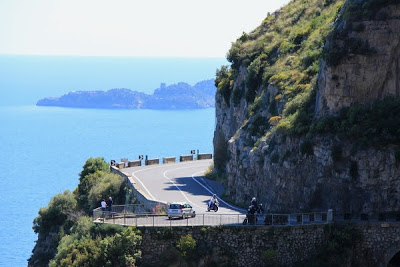
the circular route. But without hurting sentiments of the folks that live on the Kalk Bay-Simons Town-False Bay-Boulders Beach route or the M4, I’d like to say that this stretch of coastline (Noordhoek-Chapman’s Peak-Hout Bay-Llandudno-Camps Bay route) was even better. The towns and villages were prettier. The beaches were grander. But the piece de resistance was the drive to Chapman's Peak or ‘Chappies’ as it is fondly referred to. A magnificent winding road carved out of steep cliff faces. A road that is often seen in TV commercials that features flashy cars. A road that has starred in many Hollywood productions.

The drive to Chapman's Peak. Unforgettable. 
Scott used to race up and down this road when it was really narrow and the chances of overshooting a bend and plummeting down to the Atlantic was greater. But then the government had to play party-pooper. It broadened the road, strung massive iron nets on the rocks that often threatened to crush puny cars (incidents did occur, hence the nets) and basically killed the spirit of the road. ‘Nowadays, cyclists race this road.’ Scott muttered with utter disdain. ‘Whenever I cross them in their shiny bicycles, safety helmets and tight shorts, I feel a deep pain inside.’ He then made a quick swerving gesture with the steering wheel.

I fear one day some cyclist will end up in a lot of pain.  Just like a penguin.

Sunset from Chapman's Peak overlooking Hout Bay.
We made it to Chapman’s Peak just in time for a sunset in technicolour. As I soaked in a glorious palette of orange stretching across the Atlantic, I came to a conclusion. I think I know now where I want to settle down forever. 
The Pause That Refreshes

Once upon a time, much before Facebook and DVD box sets, and just after I had transited to the claustrophobic world of cubicles in big, bad Bombay, weekends suddenly got a status they never enjoyed throughout school and college days. In a manner reminiscent of a telecommercial where a decidedly chubby adult loses his baby fat due to a special magical formula and transforms into a hip model launching a new brand of ultra-hip jeans, weekends became extremely trendy. And precious. After a hard week of trying to live up to expectations of being an adult, weekends were the only time when we could throw away all appearances of being an adult.

But a typical weekend was like the fizz from the Ginger Lemonade, I used to enjoy at Iranian eateries. It would pop frenetically for five seconds or so before fizzing away to nothingness. There were reasons behind why precious weekends were frittered away with the grandiosity of a bad gambler. And all of them were valid.

There were weekends when I’d find myself watching vague European films at some friend’s pad. It would always be the director's cut. So, add another 30 odd minutes or so. The film’s plot would be grilled over a slow fire of misplaced faith in one’s cinematic sensibilities and intellectual pretensions. Words like ‘Kafkaesque’ would be bandied about liberally till the first local rolled out sleepily from its yard at 4:00 am. Sometimes, I’d drop in at a friend’s place for dinner on Friday night and then stay there the entire weekend. Or, friends would land up at my place and stay the entire weekend. See the pattern there. In between, there would be lunches at Lokhandwala’s Food-Inn Restaurant, evenings at Cafe Mondegar, dinners at Adarsh Bar and Restaurant, observing wannabe stuntmen perform stunts at Versova’s rocky beach and the occasional instance of wearing a freshly laundered shirt to Bandra’s (then) happening night clubs – Toto’s or Club 9. And before you know it, the weekend had flown over our heads like a refreshing, but really short shower, on a hot muggy day.

This hectic and almost forced social life meant frenzied weeks started seguing into equally hectic weekends. Everything became a blur. It was fun, no doubt. But it was a bit disorienting too. And then one day the solution presented itself. I came across a second-hand bookstore in the neighbourhood. A steady access to some old favourites and new dalliances suddenly opened up a much-needed escape hatch. I started devoting a few hours every weekend to lose myself in a world conjured up by a writer’s febrile imagination. This was the pause I needed to recharge, to think, to ponder possibilities, or simply to unwind.

And then I moved to Dubai. There was a temporary blip. But soon enough, the Bombay cycle started getting repeated here too. Clock in long hours at work. Clock in long hours with friends. Again, that happy blur. Again, that slightly disoriented feeling. But now I (or rather we – since life has progressed) know how to deal with it. We just clock in some quality time with authors, old, new or obscure. And this is truly the pause we need to rejuvenate, to refresh. Not Coca Cola

The Dreamer On An Island

Milos Island, Greece
I have often dreamt about living on an island where nothing much happens. As I don't have a rich uncle who can gift me an island, I try to do the next best thing possible - travel to one whenever possible and spend a few happy days there imagining the island belongs to me. I also dream about saving somebody from the jaws of a fearsome great white shark. No. The shark won't be harmed in any way. Ok. Forget the shark. The poor creatures are in enough trouble as it is from us homo sapiens. Maybe I save this person from pirates who know Kung Fu. Now, do I know Kung Fu? Not really. But I will give these pirates the contact details of a financial adviser who can double their earnings in say a decade or two. A great retirement plan. There's also life insurance plus health coverage of 32 critical illnesses, including, STDs. I mean, they are pirates. I am sure they have a better love life than the average sailor. Remember that girl in every port of thing that sailors are known for. Well, pirates with their anti-establishment stance of not having to earn money by being cubicle rats should earn them enough bad-boy points with the ladies. Especially ladies of easy virtue. I don't think they go  'Arrr!…me beauty... I seem to have misplaced my box of prophylactics during a raid…why don't we instead study the Great Bear constellation tonight…our carnal activity can wait.' Nope. I don't think this exchange would happen. Carnal activity cannot wait when the ship is ready to sail. Hence, the STD coverage too.

Anyway, I am digressing. This person whose life I end up saving coincidentally turns out to be the owner of an island. A sunny Mediterranean island with a great seafood restaurant. In gratitude for saving his/her life and for giving another opportunity to play with his/her grandchildren every Sunday and watch the Twilight series with his cronies every Saturday evening, the person quickly bequeaths that island to me. But do I accept this great gift? No way. Anybody would have done what I did. Though I doubt whether that 'anybody' could have pulled of such a deal with the pirates. Not everybody knows a good financial adviser, you see. But yes, I do end up accepting his offer of a lovely chalet by the beach. Save somebody's life and see how insistent they can be about accepting something in return. It's only a certain percentile of humans that enjoy being mired in debt by giving in to their wants. Not people who own islands.

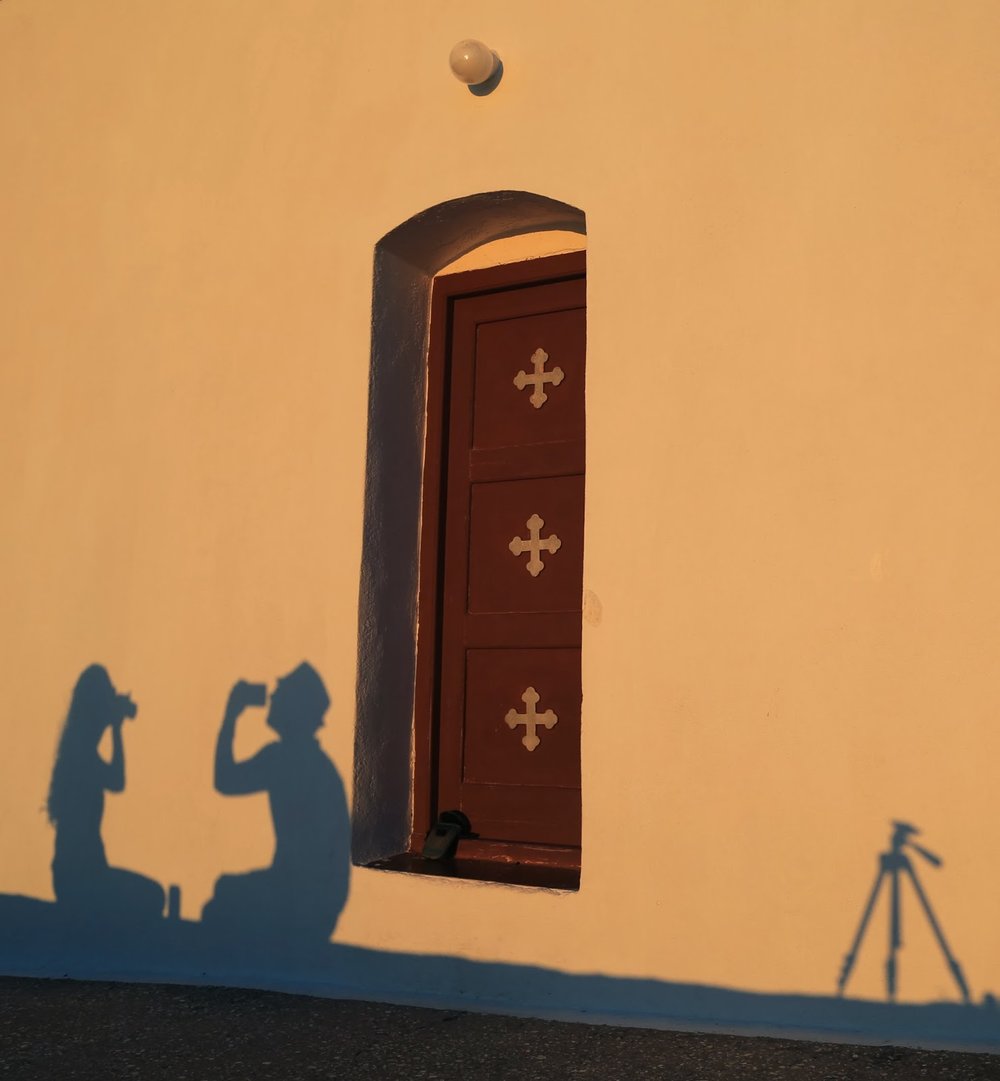
Well, I believe some dreams can come true. Especially this particular dream. Which means I should always be prepared. There will obviously be legal paperwork involved when the chalet is handed over to me. And that’s why my lawyer always accompanies me on my travels. Seen here in the photo taken just outside our B&B, is my lawyer, contemplating life and thinking how she ended up marrying a mad dreamer.

A Sixties State Of Mind


The sixties gleefully discarded the conservative robes of the fifties and skinny dipped into an effervescent mix of idealism and individuality. The result – a decade widely considered to be the most influential of the 20th century. Many have described this period as an era of irresponsible excesses. But none can deny the political outspokenness and socio-cultural revolutions of this decade. Social mores were challenged. Art flourished. Voices were raised against war. Songs about a utopian world were sung. And yes. There was also naiveté by the spades. Which obviously added to the charm. The influence of the sixties was such that it lasted long into the seventies. If it had lasted a little longer, who knows it might have even overcome the ‘Greed is good’ mantra of the eighties. And a new world order based on ‘Let’s celebrate life’ might have been established. I’d always welcome a chance to teleport myself to the sixties. Till that happens, I am happy that I got to relive some of its glamour via a shoot for a TV commercial.

Are You Afflicted With Northeasternitis?

'So, you are from Assam? Do you need a visa to come to India?' The Admin Officer at my college in Pune asked me solicitously, as he stamped my admission form. I had heard about it but this was the first time I actually encountered what I'd like to term as 'Northeasternitis' -  a condition where someone is suffering from complete or partial lack of awareness about the northeastern states of India. We might as well as be from Cambodia or China. Heck, in fact, we are Chinese or Nepali as far as mainstream India was concerned. This particular ‘visa’ incident was one of many that occurred in the 90's when I left Guwahati for my graduation studies in Pune.

Amongst the northeastern region, one place was recognized by almost everybody - it was Guwahati. This was mainly due to the fact that the city acted as a venue for several one-day cricket matches. But, yes, Guwahati could very well have been the capital of Assam, Nagaland, Arunachal Pradesh, Mizoram, Manipur, Tripura or Sikkim.

Initially, I felt bad. I knew the difference between a Malayali and a Tamilian, a Maharashtrian and a Gujarati. So, was it so wrong of me to expect the same geographical familiarity from my fellow Indians? I went blue in the face explaining to classmates and assorted youngsters suffering from Northeasternitis that there was an India beyond West Bengal.  'Oh...it's nothing like that...it's just that all of you speak and look the same.' A friend explained helpfully when I was venting out my frustration of constantly explaining where I came from. I then gave him a lesson in four-letter semantics. 

My college mates were mostly from Manipur. Some were from Nagaland and Meghalaya. A couple of us were from Assam. But we were all lumped under the group 'chinkies' a term which now apparently carries a hefty fine with the added incentive of a jail term. In a college with a predominantly Maharashtrian ‘crowd’ we stuck out like, well, chicken lollipops in a basket of vada pavs. 

At the start of my second year, thanks to a part-time job in the evening and a growing indifference to institutional academic studies, I started to bunk my morning classes that used to start at the unearthly hour of 7 am. This continued throughout the term and I ended up with the distinction of being a 'blacklisted' student. It meant I wasn't allowed to appear for my term exams. It also meant I had to request the Principal of the college, Mr. J, for special permission to appear in the exams. As I entered his cabin, I realised that I didn't really have any great excuse other than stating the absolute truth. But that would have been so out of character. I then started rambling about floods in Assam, the depleting population of rhinos, the influx of Bangladeshis, etc. etc. and because of all these reasons I couldn't attend classes that term.

Till date, I couldn’t figure out what Mr. J was thinking, or smoking. What connection did he make out of floods in Assam and I not being able to attend classes in Pune, a place approximately 3000 km away. My excuse was so full of holes that it would have sent a sieve scurrying to the friendly neighborhood psychiatrist’s couch. But all Mr. J did was pat my shoulder in a benign manner while stamping his approval on my application. As I was about to walk out, he gave an appraising look at me and asked.

‘Where is Assam?’
‘It’s in northeastern India, Sir.’
‘Where’s northeast India?’

I just couldn’t resist.

‘Well, Sir, it’s right next to the Middle East.’
‘Oh, yes.’ He muttered as he shook my hand.

I controlled myself from yelling out loud - Learned doctors: I present before you a full-blown case of Northeasternitis with a touch of Earthitis (same as Northeasternitis but with a global footprint). 

That was the day I realized I could take advantage of my region and spin any tale around it. And of course, I was not the only one doing that. Many of my friends indulged in it merrily. It was a rich vein waiting to be mined. Here are some prized examples circulated amongst some acute cases of Northeasternitis whom I encountered in college, bus and train journeys from Pune to Mumbai, tapdis (tea stalls), advertising agencies, production houses, editing studios, shooting floors. The list is quite long. Most of these were swallowed hook, line and sinker.

'You guys are so lucky. You wake up and come to college on your Bajaj M80s. Back at home; our first job after waking up was to go the back yard and chase grazing rhinos back into the jungle. Only then, the tame elephants will come out and take us to our schools. You see, elephants are scared of rhinos. It’s the law of the jungle.’

‘Tigers in Assam are like cats. In the freezing cold of winter, they sometimes come inside homes and curl up on the beds with the thickest mattresses and quilts. During those days, we'd shift to a relative's house. We’d always pray to the mattress afterwards and burn it during Durga Puja. You see the Goddess Durga always rides a tiger. Only by doing that we ensure the tiger won’t come back next winter. We make curtains out of the quilt. It's for good luck.’

‘How far is Bangladesh from Guwahati? Oh, it’s just just about a mile away from my home. Every evening, I used to cycle there and buy rice. Bangladeshi rice is much cheaper. Because the rupee is much stronger than the taka.’

‘During floods, we fold our wooden homes and haul them up the tallest trees in the vicinity. We then live like that till winter arrives. That’s why we are called tree-people. We used to make guitars out of the branches to while away the boredom.’

These tales were often accompanied with lots of drawings to ensure their authenticity. Some of the cases, in the manner of patients being told they are afflicted with some particular disease, that switched their eyeballs, rejected them straightaway. But with repeated narrations, slowly came around. But I ensured treatment (doses of actual information) was always very gradual. Why ruin a good pastime after all?

Northeasternitis is also followed closely by Earthitis. But these are cases that I tend to overlook a bit. After all, if I don’t really know, say, the different provinces of Sweden, I can’t really expect a Swede to know much about Assam. Though the words, Assam Tea, have pleasantly surprised me on many an occasion. Here are a couple of tales spun for people who just couldn’t figure out my pan-Asian good looks and didn’t believe I was Indian.

(Pointing to a map) ‘You see, Mongolia is way up here. And look where is Assam…straight down. One really severe winter, there was a massive avalanche that swept down my Mongolian village through China, through Tibet and the Himalayas, down through to Assam. This was the channel that also created the mighty Brahmaputra. So, thanks to my Mongolian heritage, I don’t look like a proper Indian.’

‘My grandfather fled Vietnam in a boat during the war. You have heard about the Vietnamese boat people, yes? That’s who I am actually. We landed in Kolkata and got political asylum. I don’t do the Indian headshake because in Vietnam it is considered insulting one’s grandfather. No, I cannot make pho.’

Thankfully, in this social media era, people are a bit more aware. Take for example, the Mary Kom instance. Indians across the country celebrated Mary Kom’s win in the Olympics enthusiastically. We even started seeing her endorsing several products. However, when it came to her state, mild to strong cases of Northeasternitis were detected. But now thanks to the film on Mary Kom and its casting controversies, most of India (hopefully) now know that Mary Kom is from Manipur. That she’s Manipuri, and not Assamese, Sikkimese, Tripuri, Arunachali, Khasi, Naga or Mizo. It’s an exponential improvement from whether she’s Chinese or Nepali.

Hopefully, the day is not too far when some big production house will end up making a film on one of Assam’s greatest warriors, Lachit Borphukan. I really don’t care who will play the lead role as long as the film gets made and enough noise is made about it. And people start getting familiar with the region. Maybe that’s the only way to treat Northeasternitis.

I will have to stop spinning my tall tales. But then, compared to the cure, it is really such a small sacrifice. 


More Bang For Your Travel Buck


Travelling. The only time when I - a normal human being who hasn’t yet won the lottery - feel totally free. The only time when I can (temporarily) escape the world of deadlines. The only time when I come almost within sniffing distance of my carefree childhood days. I know I am not the only one without a trust fund in my name. Which is why I have drawn up a list of some tried and tested tips. Travel tips that can help us get the most  out of our hard-earned holidays.

Research (and more research)

Invest in a good guidebook, of course. But read up on your destination online too. Search for blogs on that particular place. Blogs get updated more often than guidebooks. If you are researching on say, which Greek island to visit, don’t just remain content on reading an article or two about the top 10 Greek islands. Go to the comments section. Seasoned travellers would definitely have a couple of more islands to add to that list.  If you have a specific query, post it on a forum on sites like TripAdvisor/Lonely Planet Thorn Tree. 

Handling pre-holiday stress

As per Murphy’s Law, the week before you go on vacation will be the busiest one. Your inbox, instead of pinging every 5 minutes now starts pinging every minute. This is when you need to take a deep breath and remind yourself of the fact that you are going on a much-needed holiday. Start daydreaming. Begin this process at least a week or two before your vacation. Otherwise you waste the first couple of days of your vacation. Physically you may be walking down a beautiful cobbled street, but mentally you are still clicking the send/receive button on your Outlook Express.

 Adjust

 Things may go according to plan. Or may not. Instead of a 55-minute flight, you might be facing an overnight bus journey. The sea-view room might have transformed into an alley-view room. The promised smooth ferry transfer might have turned into an exercise in keeping your breakfast down. Rather than getting frustrated, face everything with a sense of adventure. And more importantly, humor. Everything falls into place then.

Invest in experiences

There are times we felt 'Oh…this is too pricey…let's skip it.' Invariably, much later, once we are back to the daily grind, that expensive experience didn't look, well, that expensive. In short, go easy on the wallet whenever possible while travelling. Do not tie yourself up in knots converting liras to rupees or dollars to dirhams. Cut down on your Starbucks fix. Skip the sales signs. Forgo a couple of movie nights. But do go for that beautiful souvenir or a meal in an amazing seaside restaurant. This is called investing in experiences.

     Wake up early (if possible)

I know this is really hard. But I always make it a point to wake up early whenever I am in a new place. The essence of a place is really felt in the early hours of the morning. Try it. You might experience something totally different.


The art of seeing nothing, yet everything.

Sometimes due to conflicting flight-ferry-bus schedules, you might find yourself stranded in a place for a few hours. Avoid the temptation to quickly head out to explore the city. You could have a better sense of the place by just kicking back for that day and relaxing in a nice waterfront cafe and watch the world go by. You are on holiday, after all.

Engage

Strike up a conversation with a local with a friendly ‘Ola’ or ‘Sawatdee’. It might be the shortest of conversations. Or you might end up getting a unique insight into the place. Either way, a warm smile is guaranteed.

Classic hits vs. off-the-beaten-track experiences

One never knows whether one will be back in that particular country. So, it’s tempting to head to the must-see-visit places. But sometimes, it can be very rewarding to ignore the hype and take off in the opposite direction and discover something new. Something that is yet to make it to the guidebooks.

Check into a B&B or a home stay

Next time you travel, consider the more wallet-friendly B&Bs and home stays. You not only enjoy a more intimate experience but also get expert advice about local attractions. A restaurant that serves authentic cuisine, for instance. Staying in B&Bs means you inject funds directly into the local economy too. You also end up meeting hardcore travellers who can point you to your next destination. 

Be safe

Generally you meet nice people. But there are always exceptions. Trust your spidey sense. If it starts tingling, respect it. It's better to head back to your lodge at a decent hour than hang around at a bar till the wee hours of the morning. Remind yourself of the fact that another glorious day of exploration awaits you.

The Foreigner In The Ferry - Shortlisted for the Long-Way Home Contest

Last year, around this time, I had participated in the Asia-Europe Long Way Home Short Story Contest organized by culture360 - an organization committed to promoting new talents and connecting Asia and Europe through arts and culture. The contest was part of the Ubud Writers & Readers Festival, Bali.

My story 'The Foreigner in the Ferry' was shortlisted amongst entries from other countries in Asia and Europe. The theme of the Asia-Europe Short Story Contest was travel. In this framework, what was expected from writers was not travel writing but creative writing that uses the theme travel as the premise for a short fiction. It was of particular interest for ASEF (Asia-Europe Foundation) to receive stories that highlight Asian perceptions of Europe and vice-versa . This competition seeks stories that give new perspectives on local culture, identities, and traditions in the context of contemporary societies and environments.

Here's the link. http://culture360.org/short-story-contest/the-foreigner-in-the-ferry-mriganka-kalita-india/

And here's the story.

The Foreigner In The Ferry

The ferry to Elephanta Island was scheduled to leave from Gateway of India at 3pm sharp. It is 3:30pm now. The ferry is still gently bobbing in its place and occasionally bumping against the stone jetty. Not that it mattered much to Tim Cotton, the professor of history at the University of Cambridge. He’s been in India for almost two weeks and if there’s one thing he has learnt while travelling is that one needs to be patient. And to his great surprise, he’s discovering that he is actually quite a patient man. Quite contrary to the image he has in university circles back home. He also got acquainted with the actual full form of IST. It is not Indian Standard Time. It is Indian Stretchable Time.
Tim sized up the man sitting opposite him on the hard wooden bench. The only other foreigner in the ferry. After having travelled a fair bit as a visiting professor in various Far Eastern countries, he prided himself on his ability to guess people’s nationalities. He relished the look of surprise on his subjects as he, more often than not, correctly guessed their country of origin.
From the foreigner’s mongoloid features, it is easy to place him as someone from South East Asia. He is too brown–skinned to qualify as Japanese, Korean or Filipino. Or, even Chinese. He could be Malaysian, Indonesian or Thai. Then he could be from Myanmar, Laos, Cambodia or Vietnam too. Suddenly, he felt a bit annoyed. It wasn’t as easy as he thought. He decided to deploy his sure–fire method. A conversation. He could pin down accents at ten meters. He had once surprised a second generation American woman by guessing her German–Polish ancestry. Which really wasn’t that difficult. Even people with the most impeccable of accents have a tendency to slip during unguarded moments. The trick is to watch out for these moments. He wasn’t too confident about Asian accents but that wasn’t going to stop him.
Tim cleared his throat. A bit dramatically. Years of dabbling half–heartedly in amateur college theatre productions had its advantages. The foreigner looked up from his book with a slight look of surprise. Always works. Tim smiled inwardly. He mopped his brow, smiled broadly and commented, ‘Hot, isn’t it?’ The foreigner took a swig from a water bottle and said, ‘Unusual weather for December in Bombay. But once the ferry starts, the sea breeze should cool things down.’
While the man spoke, Tim was furiously dredging up memories of the various Asian accents he had encountered. He started ticking off a whole list of countries in his mind. The man speaks English fluently. But he has an accent. It wasn’t the thick South Asian accent that either spat out or twisted words beyond recognition. It was more, well, pleasant. He also mentioned ‘Mumbai’ as ‘Bombay’. Something which he realized was common to the citizens but not to tourists. Every tourist he met referred to Bombay as Mumbai. Santosh, the efficient but somewhat pushy travel agent, said Mumbai is a cultural identity, where as Bombay is an emotional one.
Suddenly, it struck Tim. The man is from Nepal. There are lots of Nepalis living and working in India. Pleased as punch with his deduction, Tim decided to show off. Just a little bit. He’s a professor of history after all.
Tim cleared his throat again. ‘Pashupatinath temple has been on my to–visit list for quite some time. I have always been fascinated by Lord Shiva. Isn’t the temple located on the banks of the river Bagmati?’ Tim beamed at the foreigner. He knew his knowledge of Nepal’s foremost temple surely must have impressed him.
The man looked at Tim and said, ‘Actually, I’ve never been to Nepal. But I have heard about the temple.’
Tim knew an Armenian student who had never been to Armenia. Every Sunday, Petrosian would diligently attend special classes that taught him everything to know about Armenia. Obviously, this young Nepali here is not at all interested in the country of his forefathers. The professor in him surfaced and he couldn’t help remarking with a touch of asperity, ‘You should know more about your country. Every citizen of a country becomes its ambassador when they live abroad.’
The young man looked at Tim. He realized the elderly foreigner had made the same mistake that his own countrymen make most of the time. Thanks to a certain lack of understanding about the ‘different–looking’ people from northeast India.
It takes almost an hour to reach Elephanta Island. Time enough, Lachit Phukan thought, to educate the foreigner about his birthplace Assam, the far–flung northeastern state, famous for its tea estates and one–horned rhinos.
He started by asking, ‘You are British, right?’

The Trek To Lori Berd

A long, meandering trek is my idea of an ideal pick-me-up. While studying in Pune, trekking in the Sahaydri Mountains during the monsoon season was a time-honoured tradition that was observed almost every weekend. Sometimes even during the week. After all, which classroom could match up to lush mist-soaked mountains, winding mountain paths dotted with pretty wildflowers and magnificent views from the ramparts of ancient forts? Unfortunately, after the transition from classrooms to cubicles, such treks became the exception rather than the norm. After a long, hard week of grappling with crazy deadlines, it becomes a bit difficult to muster up the enthusiasm to head out again in the weekend. But come vacation time, I am as eager as a beaver to sniff out potential trekking prospects. So, when the opportunity to go on a trek in a picturesque region traipsed by, I quickly latched on to it.

Some co-travellers and I were spending a few days in Stepanavan, a quiet Armenian town that
makes you feel you have moonwalked into the 80’s. Stepanavan is located in the Lori district, a region known for its pine-forested mountains and a climate that injects vital doses of life into sick and tired souls. A recommended activity here is the hike to see Lori Berd (fortress) - a former capital of a king from ancient times and more recently a power centre of local Armenian royal families.

It was a perfect day for a trek. Not too sunny. Not too cloudy. We crossed the city limits of Stepanavan within a few minutes and found ourselves on a road that probably thought ‘rush hour’ is an urban legend. We set a pace that allowed us to comfortably stop at every interesting looking junction. One of the first things we noticed were dilapidated shipping containers – slightly eerie reminders of a powerful earthquake that almost razed the town in 1988. Despite the widespread devastation, people refused to leave and were housed in these containers till their houses were built again. As we soaked in views of the green mountains and breathed in the crisp air, I couldn’t help but reflect upon the fragility of life.

A couple of km later, we reached a village that looked empty, except for a little girl who walked down the only lane nonchalantly. There was certain sameness to the village. More wood than brick and mortar dwellings. Long lines of clothes drying patiently in the sun. Apricot trees. Untended lawns that had so much more character than manicured city gardens. A chicken kept on crossing the road from one side to the other.  

As we strode on feeling a bit like WWII soldiers entering a deserted village, we spotted movement
on our right. We saw a group waving their arms. And just like that we found ourselves in the midst of an Armenian family reunion. Two sisters have come with their families from Yerevan to spend their summer holidays with their parents. They were very curious about us. When they learnt that we are from India, they actually sighed in delight. Chairs were quickly arranged. Cake and apricots were whipped out. The sisters were well conversant with English and so the conversation flowed thick and fast. The discussion ranged around topics such as Royal Bengal Tigers, nine-yard saris, the great Indian head shake and Shah Rukh Khan. The elderly father smiled fondly as he remembered the yesteryears superstar, Raj Kapoor.

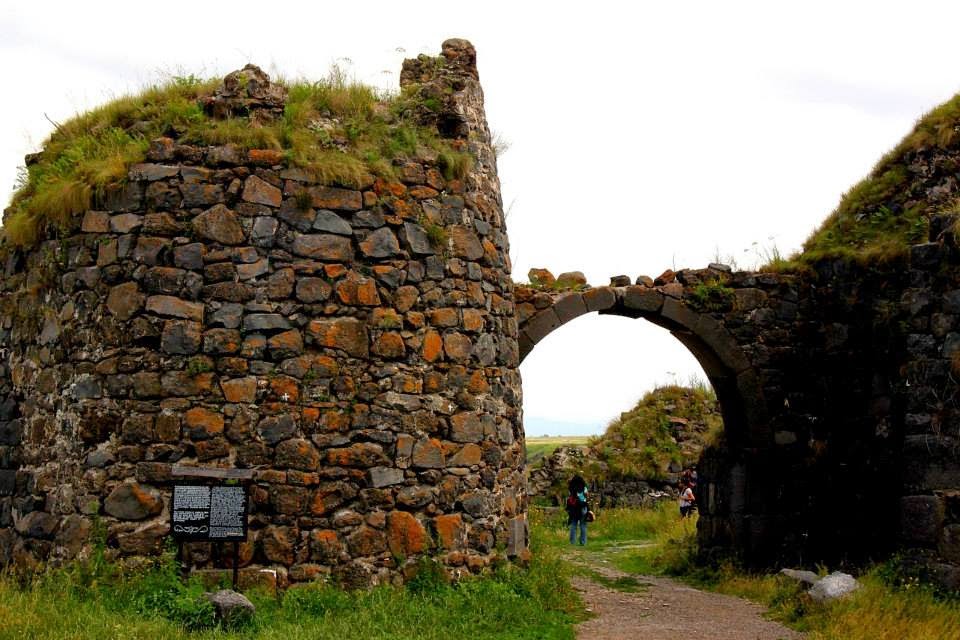
After bidding goodbye to warm Armenian hospitality, we set out for Lori Berd again, located only a km or so, from the village. There is only one word to describe the fort’s location - grand. Built on a promontory between the gorges of the Dzoraget and Urut rivers, the fort is guarded by a massive stonewall in the front while the rear is a deep canyon. We crossed under a stony arch to an assortment of rocks in an area the size of a football field. There was a small chapel of sorts in the middle of the area. Legend has it the Mongols who were on their ‘Let’s-see-and-plunder-the-world’ tour set their sights on this fort. The defenders had implicit faith in the impregnability of the fort. They drank and made merry instead of strengthening the defence. And the inevitable happened. I made a mental note to self. If I am ever in charge of guarding a fort, I will definitely remember to keep casks of coffee handy. Rather than Armenian raki.

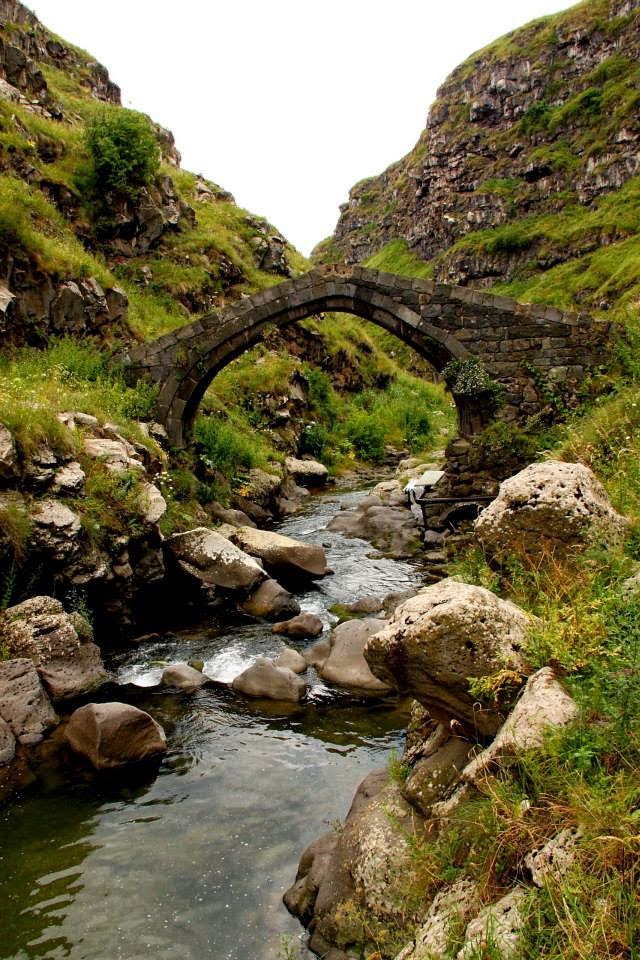
Stunning views of the gorge with a 14th century bridge far below ensure no trek to Lori Berd is
complete without hiking down to the bridge. So, we clambered down to the bridge. It was an easy hike with a few tricky bits to keep one alert. The setting of the bridge was spectacular. A small waterfall and inviting pools of water necessitated the need to change into our thoughtfully packed swimming gear without much coaxing.

We decided to test the waterfall first. It was freezing cold. We yelled and shrieked like kids in a waterpark as the water pounded down on us. Feeling brave, we jumped into the pool. Into even colder water. This time, we started howling. Visions of frozen limbs being demonstrated by a crotchety doctor to a bunch of medical students swam before my eyes. ‘This my students is an acute case of Armeniatis, caused by paying scant respect to common sense.’ And then some overeager medical student thoughtfully leans forward and taps his stethoscope on the aforementioned limb emitting a metallic clink. Not liking such scenarios, I quickly scrambled up the nearest rock. Never did the warm sun feel more welcoming. And never did I feel so alive.  

After resting a bit, we decided to head to another local attraction, the Communist Caves. The
directions were vague. We decided to follow our sense of direction. And after scrabbling like goats braving thorny nettles and steep inclined paths, we realized that our sense of direction had led us up the wrong path. As evening was fast approaching, we decided being brave once a day was enough. The lost comrades shook hands, saluted each other and took the momentous decision to head back to their base.

Having survived on a strict ration of apricots and biscuits throughout the day, we were understandably quite ravenous, not to mention, exhausted, by the time we inched our way back to the top of the canyon. As we tried to mentally prepare ourselves for the 5 km hike into town, we noticed a group of rough and tough Armenians shooting the breeze over a khoravats (Armenian for BBQ). The aroma of meat being grilled over a charcoal fire wafted across and teased our olfactory glands in what we thought was karma catching up with us for some past, forgotten misdemeanor.

Maybe they sensed our hunger. A couple of them glanced in our direction and waved. We also waved back. The group then gestured to us to join them. Armenians are like that. Friendly and generous to a fault. The warm encounter with the Armenian family in the morning was still fresh. Yet, we hesitated. Conditioning, you see. This is unthinkable in cities. When was the last time a group of strangers invited you to share their meal?

Seeing our hesitation, a couple of them walked up us and shook our hands warmly and escorted us
to the shed where a table was heaped with all things, good and grilled. My companions tried to make polite conversation in English, a language that hasn’t made much inroads in rural Armenia. But if anybody was observing us from a little distance away, they could have never guessed that.

This particular group knew three words in English. Actually, make that two words and a phrase – Yes. Thank you and Ba, ba, black sheep (somebody’s daughter was studying in an English medium school, so he knew the first line of the rhyme). There was lots of laughter and bonhomie. Food would be heaped on our plates with encouraging ‘Yes, yes and thank yous’. The gentleman who knew that one complete English phrase would smile benignly, gesture to the food and say’ ‘Ba, ba, black sheep’. Maybe we might have been literally chewing away on the black sheep of his farm.

In this manner, before you could say Armenia twice, utter strangers turned into long lost brothers over some succulent grilled meat, vodka that could knock a stallion down and dancing to the evergreen Hindi song ‘Jimmy Jimmy Aaja Aaja’. Loosely translated as ‘Come Jimmy Come’ (no, it wasn’t that kind of film), this song was from the cult film of the 80’s – the Mithun Chakraborty starrer ‘Disco Dancer’. When we said we are from Indian or ‘Hind’ as the Armenians refer to India, one man exclaimed with a shout – ‘Mithun! Jimmy, Jimmy, Aaja, Aaja’ – and all inhibitions were cast aside. He quickly ran to a car parked nearby and switched on the radio. An Armenian pop song came on. But everybody was sort of trying to recreate the moves from ‘Disco Dancer’. It might have been the vodka at work too. But, yes. The Armenians really dig Hindi film stars such as Mithun, Aamir Khan, Shah Rukh and, of course, Raj Kapoor. Those were the magic words that opened doors everywhere. After a lot of eating, drinking, singing, dancing, gesturing and posing for photos, we were given a ride back into town. 

As I rested my weary but happy bones back at our B&B in Stepanavan, I couldn’t help but think that the memories of this trek will serve as pick-me-ups for a long, long, time.

Amar, Akbar, Anthony And Paswan Da.

Paswan da was our friendly neighbourhood rickshawala. He came to the rescue when school buses were missed; elderly relatives who didn’t trust scooters needed a lift to the nearest bus station and for various other trips around town. Paswan da was also quite resourceful.  During the thunderous monsoon season, travelling by rickshaws meant the moment the heavens opened up, one would get drenched in an instant. But Paswan da had come up with an innovative solution for rainy days. He had rigged a plastic apparatus that covered his rickshaw totally with a single flamboyant flick of his wrist. He used to proudly proclaim ‘You might get wet before you get into my rickshaw, or after you get out of it, but when you are inside it you will be as dry as a leaf in winter’. He was very happy when I named his rickshaw ‘Duckback Rickshaw’. These are events that happened in an idyllic era called the eighties in a small sleepy town called Jorhat in Assam.

In the evenings, Paswan da would be found at the Rhino Cinema Hall, a popular theatre in an army cantonment. Though it was meant for the armed forces, civilians were also allowed. Since the agricultural university colony where I lived was only a couple of km away from Rhino Cinema, many would give their trusted Bajaj Chetaks a break and instead engage Paswan da’s services for the evening. An arrangement that suited him fine. He not only had a confirmed to and fro fare but also made himself part of the conversation between the filmgoers, which after the film, usually revolved around the film, rather than how the cost of rohu fish has gone up in the local haat (bazaar). Paswan da would gently prod and ask questions regarding the film as he pedaled away. After a couple of trips, he could describe almost every scene of the film without getting into sniffing distance of the oily samosas served in Rhino Hall’s lobby. This retelling of the film in bits and pieces would be done near my bus stop to an appreciative audience comprising of the other rickshawalas. Many a time, I’d get down from the school bus and spend a few pleasant minutes listening to Paswan da’s animated description of the latest film playing at Rhino Cinema. And if he was in a really good mood, he would would borrow a cigarette from Om Groceries and would act out the famous dialogue from Vishwanath starring Shatrughna Bhaiyya - Jali ko aag kahte hain, bujhi ko raakh kahte hain, jis raakh se barood bane usey Vishwanath kahte hain." He would then return the cigarette back. Paswan da was a non-smoker.

Other than keeping aside a small amount for his expenses, Paswan da used to send all his earnings to his family in Bihar. He would, however, save up a little amount of money for his one indulgence in a month – a film at Rhino Cinema.

Maybe it was red tape. Maybe there were budget issues. Maybe somebody found some perverse
pleasure in it. But Rhino Cinema only screened films that were at least five to ten years old. For example, Manmohan Desai’s classic ‘Amar, Akbar, Anthony’ was released in 1977. But by the time it graced Rhino Cinema’s screen, it was 1986. So, yes, popular films. But really dated films. But this little fact did little to curb the enthusiasm of people in the neighbourhood who flocked to the theatre to watch the histrionics of Amitabh Bachchan, Vinod Khanna and Rishi Kapoor.  Amongst them was Paswan da too. He was so impressed by Amitabh Bachchan’s famous mirror scene after getting a royal walloping by Vinod Khanna, that he did something unprecedented – he watched the film for a second time. In his words, it was a total paisa wasool film.

However, watching a film was a highly researched decision. Paswan da would weigh the different opinions and reviews about the film heard while ferrying passengers and then take an educated decision. If the film was not worth it, he would skip it for that month and the money allotted would go into his savings. As he liked to explain in his own inimitable manner, ‘Why should I spend my hard-earned money to watch my own hard life on the big screen. Watching such films only makes my heart grow heavier.’ This was a lesson learnt from watching a film called ‘Gaman’, a film that revolved around a taxi driver (Farooq Shaikh) who left his ailing mother and wife in U.P. to earn a living in Bombay. The film ends with Farooq Shaikh driving around Bombay without being able to go back to his family. Paswan da knew from his research that the film didn’t really end on a happy note. But he still went ahead as he heard that the film depicted the plight of migrant workers. By the time the film ended, he was extremely upset. He later confessed that he cried for many nights after watching the film.

But the antics of Amar, Akbar and Anthony always kept him smiling.

As the era of the Ambassadors, Premier Padminis and Maruti 800’s gave way to the Ford Figos and the Hyundai i10s, the shift in social mores started getting reflected in films too. Single theatres turned multiplexes ensured the emergence of a different breed of filmmakers who started making films they believed in, to varying degrees of success. However, mass entertainers, more often than not, still continued to score heavily at the box office. But this was something that never found favour with critics or the intelligentsia. The humour, the performances, the action sequences, the song and dance numbers, the lack of a plot. Nothing was safe from being ridiculed. And now with the proliferation of social media platforms, it has become the norm to start bashing this genre of films from the time the trailers are released. What’s even more vexing is that most of these social media critics would even go for these films and then again moan about their experience online. If one cannot make the distinction between a Housefull and a Gangs of Wasseypur, then one is really not qualified to froth online about money wasted on a ticket. 

It’s simple. Masala entertainers are not made with the intention of satisfying the finer sensibilities of cinephiles. They are made with the single-minded purpose of getting crowds in the theatres by applying the lowest common denominator factor.

For many like Paswan da, a cinema ticket is a ticket to a fantasy world. For three hours or so, they can leave their worries far behind as they laugh at Shah Rukh Khan’s clumsy attempt to fight a villain three sizes bigger (Chennai Express) than him or cheer wildly as Akshay Kumar uses a row of trucks as a jogging track (Boss). They are not bothered whether it is meaningful cinema. All they are concerned with is that for an all-too-brief period of time, they forget the tables they have to clean, the taxis they have to drive and the streets they have to sweep. Only a paisa-wasool film can help them achieve this state of mind.

I had once taken a friend who ticks all the right ‘intellectual’ boxes, to a film festival to watch Roman Polanski’s ‘Knife In The Water’, an intense film that revolves around three characters on a boat. A much-acclaimed classic that left my friend cold. Earlier in the day, he had a presentation that went horribly wrong. A presentation that he was working on for two weekends in a row. All he could say later was ‘I wish we had gone for Apna Sapna Money Money instead. I desperately wanted something to take my mind off the presentation. Something fun.’ Apna Sapna Money Money made money not because of its content, or lack thereof, but because it also made white-collar workers take their minds off hard-to-please clients, missed deals and botched presentations. Mentioning ‘Knife in the water’ and ‘Apna Sapna Money Money’ in the same sentence might get film enthusiasts get their hackles up. But the truth is, the world out there doesn’t really care much about what you and I think.
 
In short, keep calm and watch the films you want to. And let others like Paswan da enjoy a few hours of escapism without getting the country's history and culture into it. 


Superheroes. Western And Eastern.

Amar Chitra Katha’s ‘Tales of Hanuman’ introduced me to the heroics of this mythological superhero. I was fascinated by his exploits. Especially the one in which he flew up to the sun thinking it’s a nice juicy mango, or some equally delicious fruit. His Lankan pyrotechnics, of course, is the stuff of which legends are made of. The wrestling icon of India, Dara Singh was aptly cast as Hanuman in the 80’s mega serial ‘Ramayana’. He did try his best to do justice to this superhero with the help of his highly expressive eyebrows that wiggled lovingly at every utterance of Lord Rama and nostrils that flared alarmingly in the mighty Ravana’s presence. However, the not-so-cutting edge graphics of that era and the occasional HMT watch on Hanuman’s hand did not do justice to this mighty hero’s adventures. This watch fact is a bit of an urban legend though. However, canvas shoes were often spotted on the feet of the soldiers who pranced around each other waving their weapons in a desultory fashion on the battlefield.


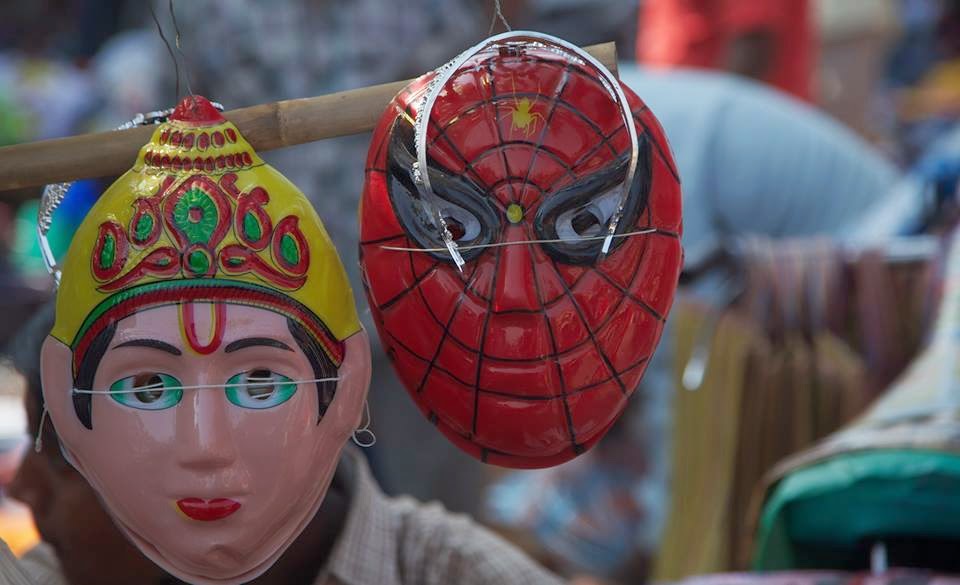
Around the same time, another caped crusader started making a dent on my impressionable mind. Every Sunday at 5:30 pm, ‘The Amazing Adventures Of Spiderman’ would be shown on the one and only Doordarshan channel. Playgrounds would get emptied. Birthdays in the neighbourhood were postponed till late in the evening. Homework was completed. Favourite uncles accompanied by hot samosas and juicy jalebis were ignored. A lot of compromises were made for the webbed superhero as he swung from one adventure to the other. In fact, one of my most memorable birthday gifts was a special Marvel Comics ‘bundle’ edition of Spiderman. Memories of those wonder years came cascading back as I spotted these two childhood heroes together in the bustling Beltola Bazaar in Guwahati.

Love In The Time Of Intolerance


Dighalipukhuri (or the long pond) is a famous landmark in my hometown, Guwahati. I used to cross this tree-fringed pond every day on my way to school. The beautiful location of the pond and its proximity to famous institutions such as Cotton College and Handique College ensured its popularity amongst young couples eager to spend some quality time with each other. An activity that used to raise the BP levels of the older generation considerably. I particularly remember a letter addressed to the Editor of the venerable daily, the Assam Tribune, lamenting how the Assamese society is crumbling under this onslaught of unbridled youthful passion (or words to that effect). All because the writer spotted some cooing youngsters at Dighalipukhuri when he went for his morning walk. Couples who obviously found each other’s company more interesting than early morning lectures on Keynesian economics or the difference between mitosis and meiosis.

Much water has flown down the Brahmaputra since then, but the attitude towards public displays of affection hasn’t changed much even today. There is some tolerance. A bit of grudging acceptance. At times, there’s also tacit approval. Take Mumbai’s Bandra Bandstand for instance. A romantic albeit rocky Eden of sorts for lovers craving some us-time away from the prying eyes of millions. Previously, cops patrolling the area used to act as the moral police. Any hint of affection was quickly dispensed with a stern warning. Now they intervene only they see couples oblivious to the incoming tide and are in danger of being swept out to sea. On the other hand, there are the culture zealots who preserve our age-old culture by ganging up against these young couples on specific days of the year. Or, if they have nothing else to do, on specific days of the week.

It’s really difficult to comprehend how simple expressions of love can be frowned upon. Simple being the operative word here. Of course, people have a right to express their reservations about tonsil hockey being played in a bus or bare-bodied horizontal calisthenics being performed in a nana-nani park. But other than that, I really don’t see any other reason why we shouldn’t celebrate being in love in public like this lost-in-love couple. In an increasingly violent and intolerant world, these are the moments that serve as a reminder that life could be beautiful too.

Memories Of A Merry Season


When the sky is a clear shade of blue, cuckoos sing lustily and bees flit tirelessly from one kopou phool (flower) to another, you know spring is in the air. And when it’s spring, it’s time for Rongali Bihu, Assam’s most popular festival. One of the endearing traditions of Rongali Bihu is the Bihu husori (troupe/band) - dancers who perform in the front yard of houses (and earn a little bit of money and lots of betel nuts in the process). 
I was about nine years old when I became a part of a Bihu husori made up of other four other kids from the neighbourhood. Seeing my non-existent dancing or drumming skills, I was allowed to sway and clap vigorously (in rhythm, of course) with a constantly sniffling 6-year old who obviously shared the same non-skills as mine. An 11-year-old boy (who apparently was born drumming) led the troupe. This excellent dhulia (drummer) along with his sister and brother (the dancers) were instrumental in earning us enough money to buy a ‘local’ (free-range) chicken for the Bihu bhoj (feast). These and other happy memories were dredged up by the pulsating husori performance by the amazingly talented husori troup of the Axam Samaj, UAE.

Of Cats And Dogs


There were some random discussions going on at a friend’s house. And as random discussions are wont to, the topic suddenly shifted from the secret pleasure of wearing mismatched socks to growing up with pets. Somebody then asked me whether I love dogs or cats. And that simple question sent me scampering down memory lane in a flash.

I adore dogs. I can't get over their capacity for endless unconditional love. We have had a couple of dogs of mixed parentage. In other words, we had no idea about the parentage.
One of our first dogs was Kalu. He had a glowering no-nonsense personality. Not exactly Travis Bickle in Taxi Driver. More the senior Focker in Meet the Fockers. Not many could befriend him. And only a select few were allowed to rub his belly. After Kalu went to that special place where he could chase rabbits to his heart’s content, the frisky Cap'n Jack Sparrow entered the scene.

Cap'n Jack was a mongrel that my mother claimed had Alsatian genes. Not because of his dimensions for sure. He was just a little bigger than the average dog. But because he could be quite ferocious if he wanted to. And therein lies a conundrum. Cap’n Jack was so named because of his as they say in India - slightly ‘off’ behavior. He was never sure whether he wanted to be ferocious or not. Especially when he was young. He will bark away at a stranger. 

But the moment the stranger made a friendly overture, such as whistling, Cap’n Jack will expose his belly with a happy grin plastered on his face. Or climb all over the person with his tail wagging in all directions. Once the tail wagging was so intense that my mother’s colleague’s ‘Made in China’ wig flew off. Cap’n Jack obviously thought it was great fun. He quickly grabbed the wig and ran off with it. The incident had a profound influence on that colleague. He embraced his baldness.

But then like most of us, Cap'n Jack became an adult and sobered down quite a bit. He now walks around fiercely protective of us. And the house. He will greet regulars with excited barks. However, strangers are welcomed with menacing growls till he sniffs out their intentions. You can learn a lot about people when you have a dog in the house. The growls are always reserved for the mean ones. The 'well wisher' who is not exactly one. The ‘friend’ who always has a sob story ready for some cash in return. Or the neighbour who is always ready to borrow stuff but then forgets to return them. When my brother and I got married and our respective better halves came home, Cap'n Jack just trotted up to them and welcomed them with cheerful wags of his restless tail. I heaved a sigh of relief. And I am sure so did my brother. Cap’n Jack during his youthful days had this habit of waking us up in the mornings with a jolly fight on the bed. He would especially target my brother. He would jump on the bed and pull the blanket away. Failing that, he will try to get inside the blanket. This activity is accompanied with a lot of excited barking. The poor thing is now getting on in years and every time we are home he tries to pull that same trick but you know what they say about willing minds but non-compliant flesh. Bonding with Cap'n Jack is one of the highlights of being at home.

My brother and I love cats too. I especially relish winning their (sometimes) hard-to-earn trust and
dare I say, affection. Yes. As any cat lover would testify, cats can shower affection too. In their own special way. One of our first pets was a runaway kitten. He responded quite favourably to the name my brother and I gave him – Meow. It’s another thing that all other cats that have adopted us have also been anointed as ‘Meow’. In order to avoid confusion, we decided to have Meow The First, or Meow The Second, Meow The…you get the drift. Anyway, Meow The First was as affectionate as the clichéd Bollywood grandmother – the one who’d eat the Sunday section of NavHind Times to quell her hunger pangs while she fed her grandson the last remaining piece of mutton rogan josh. He thought nothing of grooming us after he finished grooming himself. 

We doted on Meow The First too. During my high school days, he was my alarm clock. My mosquito net used to serve as his oversized hammock. Every morning, at precisely 4:30 am, I’d wake up to find Meow inches away from my face, mewing to let him out for his morning walk. Even today, memories of Meow’s playful antics are still fresh in our minds. 

My brother and I have been fortunate enough to be adopted by several cats during our school days, college years and Is-the-weekend-already-over phase. There have been attention-seeking cats, constantly-acting-cute cats, affectionate cats, not-so-affectionate cats and injured cats. Attention seekers – you scratch them behind their ears and they keep on nudging you for more. Drama queens – they meow piteously, you feed them, they meow some more, you feed them more and then suddenly they go quiet and start licking and grooming themselves. Mischief mongers – they will quickly slap the nearest unsuspecting feline nearby and go on a wild dash around the house knocking over all kind of items. Especially fragile items. The conversationalists - Believe it or not, I once had almost a 20-minute conversation with a heavy-lidded cat with impressive whiskers. I think he told me the meaning of life or how to open a bottle of jam without exerting much pressure. 

Right now, I stay in an area where people find it a bit convenient to abandon their pet cats. Quite a
few of them have somehow found their way to our place. One fine morning, a mother appeared with her kittens and then used her feline intuition to decide that we can take better of them than her. She would then disappear for hours on end with the responsibility of feeding the kittens given to us. And then she disappeared for good. One kitten succumbed to an illness. While the other made herself a part of our lives. Then a gang of three brothers and sisters surfaced from nowhere. Obviously somebody who once took good care of them has left them behind. They are extremely friendly and I refer to them as ‘comcats’. Definition of comcats (comfort + cats) – cats who can make themselves comfortable in the most comfortable part of the house without uttering a single ‘meow’.

The sister is extremely affectionate while her brothers don’t miss any chance to bully the others cats. Especially the kitten that is now a young adult with temper and sharing issues. The sister looks for every opportunity to climb on the nearest sofa and catch a few winks. Or climb on top of my head and stay put there, purring away contentedly. The kitten turned angry adult loves nothing better than a good chest and belly rub rub. The moment she spots my hand hovering near her, she quickly lies on her side. My better half, not really an ardent admirer of these furry balls of fun, mischief and occasional Lady Gaga impersonators, declared them persona non grata inside the house. However, slowly but surely, they started unspooling her resolve like a ball of twine. Nowadays ‘cat food’ has found its way in the weekly shopping list.

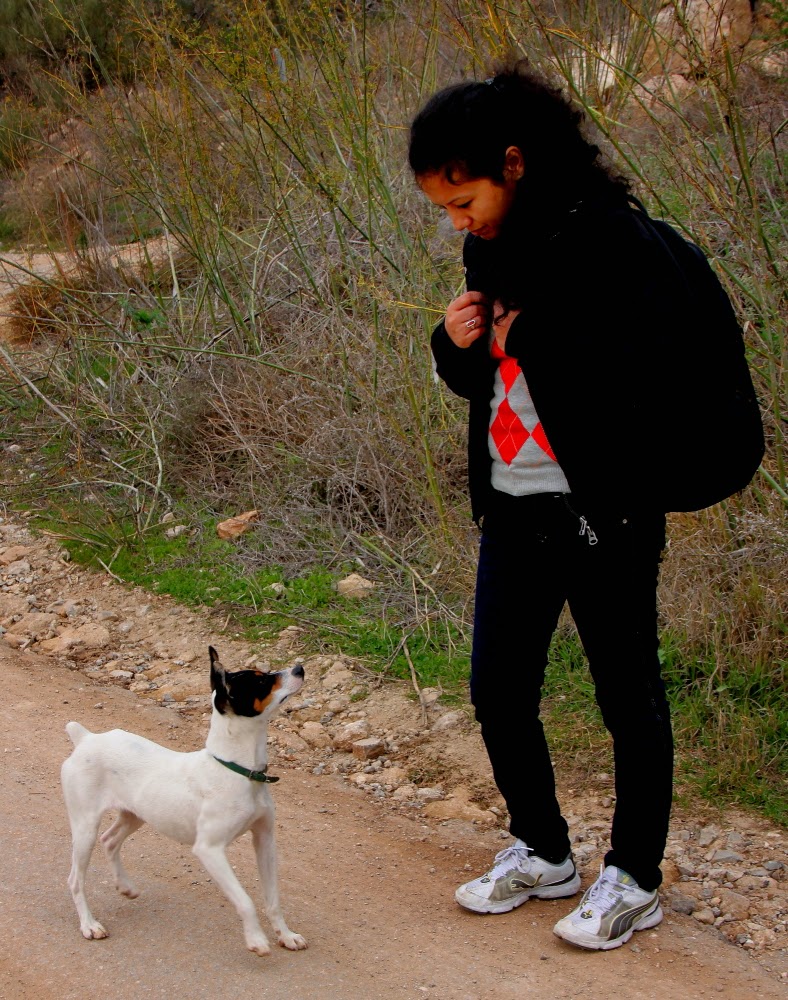
Over the years, we have had several pets. A turtle. A parrot. A pair of rabbits. And then very quickly a colony of rabbits. But I have found cats and dogs to be the best companions. So, am I a cat or dog person? Well, let me put it this way. I’d want one curled up on my lap, purring away contentedly and the other at my feet, chewing away on a slipper, also contentedly. It's called having the best of both worlds. 


Doctor, Engineer or Farmer?


Engineering or medical? The moment I made the shift from simple trigonometric equations in high school to the labyrinthine alleys of derivative calculus in senior secondary school, this question appeared magically on the lips of well-meaning elders and pesky neighbours whose sons/daughters have already cracked the coveted medical/engineering exams. The knowledgeable ones advised me to keep options open. Which meant they had assessed me pretty well and realized I had as much of getting into an engineering or medical college as of Mohun Bagan defeating FC Barcelona. As it turned out, they were right. Engineering was never an option. I did flirt with the notion of becoming a vet for some time though.

In the mid nineties, post-liberalization India was a very dynamic nation. The nation transformed from a somnolent bear into a rampaging bull. And suddenly, there were opportunities that promisedgreat riches. A degree in the medical sciences was always a traditional favourite. However, it was nothing compared to the holy combo of an engineering and management degree.  The ultimate winner was, of course, an IIT-IIM degree. Parents who spent decade after decade in the same job saw a different future for their children. The almost reverent whispers of never-heard-before salary packages played a big role in upping the pressure. Thankfully, my very unimpressive scores ensured no nights without sleep were lost in wondering whether I should attempt appearing for these exams. I had taken the decision to change my discipline from science to commerce. And expectations vanished with the surety of rains on an overcast day. As I languidly opened yet another PG Wodehouse, I couldn't help but take pity on my academically inclined contemporaries who were carrying the massive burdens of expectations of their family on their young shoulders.


But those days were nothing compared to the competition of today. Not only has it increased exponentially but also the surfeit of technical institutions, good, bad and ugly, has made it possible for almost anybody to dream of getting into one.

There was a time though when it was tough to go to school or college, simply because they were almost non-existent. This was during my father's time in the 1960's when he was growing up in a small village in the laidback Lakhimpur district of Assam, a state tucked away in northeastern India. Hailing from a family of farmers, my father could have led the simple yet fulfilling life of a farmer. But my father decided to plough an academic furrow instead. He ended up as the first graduate and post-graduate from that village. Subsequent degrees in law and journalism ensured whenever my father visited his village, depending on their academic inclination, students either flocked around him, or stayed away.

One of the younger lot who sought my father’s company was Dhiren Khura (khura – uncle), my
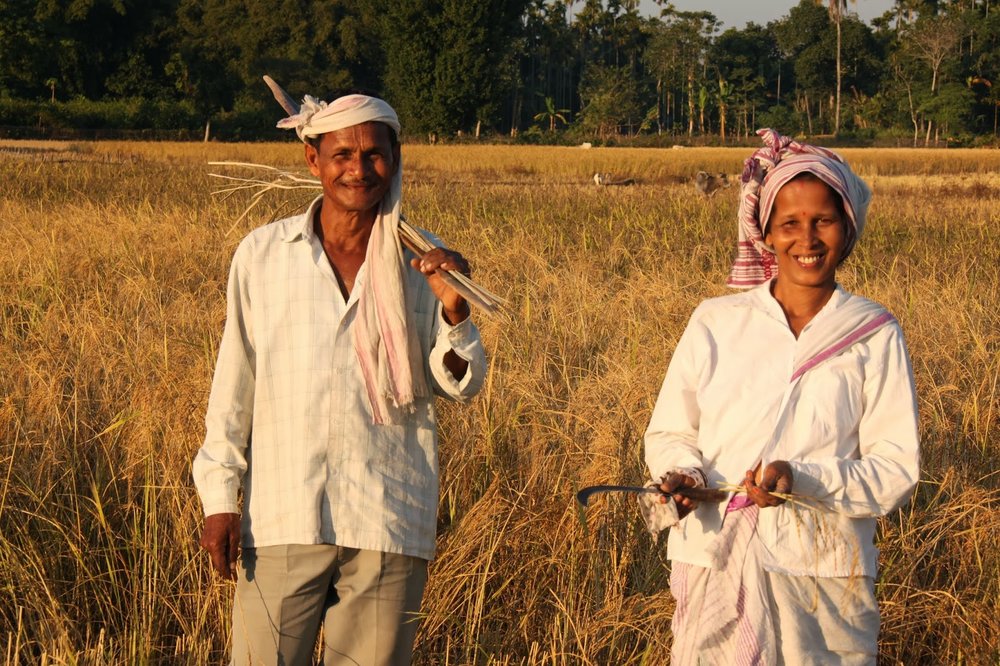
father’s cousin - a kind and quiet gentleman with an understated sense of humour. On my last visit to Lakhimpur, I had a chance to meet up with him. It was harvesting time. He took me along with him when he headed out to help his wife in the fields. His wife, a graduate, teaches in a school. But the family’s income comes mainly from farming. Dhiren Khura asked me about my profession. I explained how the fluctuating world economy is creating a lot of stress everywhere. Nothing is certain. Nothing is sacrosanct.

Dhiren Khura said that he had read in the papers that people could come in the morning and realize that they are out of a job. He then recounted how he was looking out for a job after completing his graduation. He sought my father’s advice on how to apply for jobs and prepare for interviews. Unfortunately, in the early-80s, the word ‘plentiful’ could not be used for employment opportunities. The private sector was far from opening up and jobs in the public/government sector were dependent on several external factors – a good word by someone influential, some dexterous pulling of strings, an exchange of cash, or just being in front of the right committee at the right time.

Dhiren Khura made the rounds diligently. But an appointment letter always eluded him. After travelling back and forth from Lakhimpur quite a few times in search of that elusive white-collar job, he realised every time he came to a city, he missed the open spaces of his village. He came to a decision to continue doing what came naturally to him – farming.

The life of a farmer is far from easy. The weather plays a huge role. But more often than not, nature is on the side of the farmer. As Dhiren Khura explained with a touch of pride, his hours of work under rain and sun over the years have not resulted in tremendous riches but have given him enough to support his family and unmarried elder sister.

As Dhiren Khura got busy tying bales of hay, humming a song softly, I couldn't help thinking that he
escaped the trap that most people fall into. Working under clear blue skies instead of a room (however well designed it might be), with chirping birds and softly mooing cows for company instead of carping colleagues and disgruntled bosses. He’s leading the simple and fulfilling life that people seek through self-help books, life coaches and online searches.

All because he decided to do what came naturally to him. I guess there’s a lesson in it somewhere. 

Anticipation


The elevator stopped at Level 7. As the doors opened, the Bachelor strode out purposefully. He barely acknowledged the nods of ex-colleagues as headed straight towards the Yogini’s department. His gait quickened with the anticipation of seeing her. 

The observant might have noticed the bright orange socks he had worn specially for the occasion. It was her favourite colour. And she had a sock fetish. The Bachelor didn’t believe in leaving anything to chance. Chess. Yes. Poker. No. He tossed his gelled flowing locks streaked with grey in what he assumed was a charming manner. To onlookers it came across as trying a bit too hard. But then can love and longing ever be reasoned with? 

He squared his shoulders as he skidded to a stop near the Yogini’s workstation. He bared his lips as pleasant memories of snatched afternoons and stolen nights spent regaling her with his insightful (and humorous) takes on life, cricket and Tantric Yoga came cascading back. And then he stopped baring his lips. The Yogini wasn’t there. The Bachelor hadn’t been in touch for sometime. Anything could have happened. Another agency. Another country. His gruff tone failed to mask the unmistakable tremor in his voice as he asked the resident Mongolian ‘Where is Yogini?’ 

The Mongolian who had already anticipated the question pivoted on his heels and gestured towards Yogini’s current coordinates – the other corner of the office. At that precise moment, she looks up from the other corner of the office, and their eyes met. Even from that distance, she could see the gleam in his eyes. Yogini sighed and glanced at her ring on her left hand. She should have sent him an invite.

Musandam photo in Lonely Planet


I took this photo during one of my our camping trips to Musandam. Often referred to as the 'Norway of the East', this mountainous region in Oman is known for its rugged beauty, fjords and a sense of timelessness. Seen in the picture is Khor Najd, the only beach in the region accessible by road - a winding 5-km long mountain pass that results in chattering teeth and white knuckles. When Lonely Planet asked readers to contribute photos that that capture the essence of a place, I quickly mailed across this photo. And was lucky that it got selected and published in the September-October issue.


The Enthralling Dances Of Bali


A guest blog post by Manya Singh

The mesmerizing island city of Bali will surprise you with every step. It is a common misconception that Bali is a city of ‘temples’. Bali has stunning temples, but it also has pristine beaches, and other tourist attractions. However, the major highlight has always been the traditional customs and rituals that are followed thoroughly around the city.

One such custom is the Balinese Dance. A dance form of many styles - some intimidating, some comic, and some representing pleasure.  The various best dance forms are:

Kecak Dance: In spite of being a non-traditional dance form Kecak dance has been one of the most celebrated dance styles of Bali. Reciting the Ramayana tale, the shirtless men chant ‘kechak-ke-chak’, imitating a troop of monkeys, throughout the dance in a rhythmic tone. This spectacular dance form is a strong attraction for tourists.

Rejang Dance: The Balinese performs this dance style to show their devotion to dance. Rejang means ‘offering’, and it is performed along with a grand religious ceremony either inside or outside the temple.

Barong Dance: This dance form narrates the story of good versus evil, wherein, the lion-like Barong conquered over the evil witch Rangda. The dance is accompanied by an orchestra – Gong Kebyar. The orchestra is made with a variety of gamelan instruments, metal gongs, and symbols.

Legong Dance: Balinese dance is all about style and authenticity. Legong dance is one such form that is considered as the most graceful dance form. This dance is performed in varied forms. Two Legongs dance in a mirror image of each other to depict the symbolic story of a defeated king.

Baris Dance: A dance form that recites the stories of the warriors and their weapons is the Baris Dance. Generally, Balinese men perform this dance form, praising the victorious Balinese warrior through their dance.

Sanghyang Dance: Sanghyang is basically a sacred spirit that temporarily possesses a dancer. This sacred dance is performed to rescue the village of any evil spirit. It is an unusual version of the Legong dance, and is performed by two young girls with eyes closed shut. The dancers are blessed with holy water sprinkled by the pesmangku. 

The Balinese dance is a way of expressing the traditional culture and traditions of the city. These dance forms are a visual treat for the eyes. So, book Bali packages from India today to witness the undying integrity of the various Balinese dance forms. 

About the author:

Manya Singh is a photographer & solo traveller by hobby, travel blogger by passion and lifestyle writer by profession. At present she is responsible for managing and planning holidays at http://www.weareholidays.co.in

The Amalfi Coast Drive


'Michael, make me an offer I can’t refuse.' I couldn’t resist saying in what I thought was my best Italian accent to Michael Rizzo, owner of Campania Car Rentals. Michael obviously had heard that dialogue enough number of times and came swiftly to the point. 'You cannot afford that 1951 Alfa Romeo convertible, even for a day. However, I do have a 2010 Peugeot that suits your budget. It’s fast enough for the drive.' Seeing my hopeful look, he further added 'And no, it’s not a convertible.' 

It was a beautiful May afternoon in Praiano, a small town located between Amalfi and Positano, the Amalfi Coast’s poster towns. I was alternating between admiring the stunning seascape and ogling at a red Alfa Romeo convertible while occasionally paying attention to Michael.

We were sitting in Bar del Sole, Praiano's favourite cafe. Located on the Amalfi Highway and overlooking the stately Church of San Gennaro, Bar del Sole is the main point of reference in Praiano. One doesn't say, 'Let's meet at Bar del Sole'. One simply states the intention to meet and expresses a time conducive to the concerned parties. And the parties will meet up at Bar del Sole. Unless one states in no unequivocal terms that the meeting should happen at the cafe at Onda Verde Hotel. Or at the Il Pirata restaurant down at the beach. So, when Michael said that he would do the necessary car rental paperwork over a coffee at 5, we had no doubts about where to land up. When you are in a village with a population of 2000 or so, you quickly get to know the local favourites.

The paperwork is completed after many queries - CDW - means if I bang into another car, crash into the rocky mountain face or decide to dive into the sea while still in the car, irrespective of the damage, all I needed to pay is 100 euros.  Valentina, the leather-clad, chain-smoking assistant of Michael handed over the keys to me.  She smiled sweetly and pointed at the little cross dangling from the key chain. 'That cross is to make sure you don't fall into the Mediterranean while admiring the beauty of our coast.' I didn't know whether she was joking or just stating a fact. But actually she had nailed the subject.

Yes. The Amalfi Coast in Southern Italy is considered to be one of the world’s most spectacular coastlines. And yes, it is considered to be one of the most hair-raising drives too. Stretching some 40 odd km from Sorrento to Salerno, this famed road winds through red-roofed villages clinging precariously to steep mountainsides with the Mediterranean beckoning seductively below. An omnipresent lemon-scented breeze removes all last vestiges of doubt about whether it's easier to hop on a coach and join other gawking tourists or think of oneself as a modern-day adventurer and salivate at the prospect of tackling hairpin bends behind the wheel of a 1951 red Alfa Romeo convertible. Fine. A 2010 Peugeot hatchback.

But the point had been made. I think.

We walked to the tiny parking lot where a magician had parked 15 cars in a space meant for 10. Michael seeing me wring my hands in a very un-alpha male manner, quickly asked for the magician who doubled as a waiter at the Bar del Sole. Times are tough after all. After a few deft turns, my blue Peugeot miraculously found itself on the road. I got behind the wheel and suddenly my long-cherished dream suddenly became all too real. I drove straight up to our home stay near Piazza Moresa. Correction. I drove half way. I found parking near the Praiano Municipal Hall. Blue lines for tourists. Yellow for residents. Parking spaces in these towns are like the perfect partner whom one knows is out there somewhere. But it’s a bit unlikely that you will find one the moment you step outside your front door. I devoted a good part of the evening to studying the details of the drive ahead.   

I woke up to a bleak sky overcast with clouds. I pondered for a brief moment whether it was an omen. But as I walked down to the car, the ever-present lemon-scented breeze whispered encouragingly in my ears. I could barely restrain myself from breaking into a jig.

The easiest part of driving down the Amalfi Coast was the directions. There is one highway - the famous SS163, or the road of 1000 bends. You just keep travelling on it, either towards Salerno or Sorrento. The villages/towns that are located high above in the mountains are also well signposted. You basically go off the SS163, snake up into the mountains, down a quick espresso, gape at the views, explore the town/village, and then drive down till you get back to the SS163. The most difficult part was, of course, the driving.

As I hit the highway, the Italian RJ chirped merrily that everything's fine with the world. Or words to that effect. She sounded so positive that she couldn’t have been talking about broken hearts or crumbling economies. On my right, a steep drop down a rocky mountain face was the deep rolling Tyrrhenian Sea, whitecaps skittering across the waves. On my left were mountains with what could be only described as luxuriant Mediterranean foliage, lemon orchards, pretty houses stacked on top of one another and the occasional shepherd defying the laws of gravity with typical Italian impudence. I rolled the windows down and tried to sing along with whatever caught my fancy. There was hardly any traffic. The tourist season was just about stirring from its long winter slumber. Come summer, the narrow road ensures traffic jams are as common as a Fellini film at a film fest. 

I quickly got used to the driving quirks of the locals. The sight of a hairpin bend means a sharp toot of the horn and sudden acceleration was in order. The prospect that a slight misjudgment might make one or two cars fly off the road and down the precipitous drop apparently doesn’t occur to the driver/s. As yet another car blasted past within air kissing distance at a bend, I started noticing the strategically placed ‘corner’ mirrors at every bend. As I approached the next bend, I kept my eyes peeled for the corner mirror. An act that revealed a massive tourist bus thundering around the corner. Forget air kisses, I mentally prepared myself for a messy coupling. With nothing to lose, I slammed on the brakes and let out one piercing blast of the horn. The bus driver saw the whites of my eyes and decided to test his brakes too. And somehow we managed to find space in that tight corner. Imagine a 6ft6 bouncer and Woody Allen inside a trial room trying on new clothes without touching each other. The bus driver shouted encouragingly as I gingerly moved inch by inch past the bus angling the car in ways I thought was not possible. I almost heard my guardian angel weep with relief as I turned the corner without scratching the car or bruising my ego.    

As I drove on merrily with newfound confidence, narrowly missing sharp corners and young daredevils with their squealing amores wrapped around them on Vespas, I came to a theory about how the highway must have been visualized. When King Ferdinand II gave the order to build the SS163, the team of engineers (all brilliant, I am sure) must have been led by somebody who had an immense love for spaghetti. Maybe in his family of 20, during hard times, whenever spaghetti was made, only a few got to eat it. Others just devoured it with their eyes. Or, maybe he had a doting mom who made the tastiest spaghetti in Italy. Anyway, when he got the brief, the first thing he must have done was to discuss matters over a long lunch where the main course was, surprise, surprise, spaghetti. As they discussed at length the vexing problems created by the invention of motor vehicles and how people for centuries had traversed this region easily by foot, donkeys and boats, the Chief Engineer noticed a strand of spaghetti lying on top of a map of the Amalfi Coast. The strand stretched from Salerno to Sorrento connecting all the places in between. And voila! The Strada Statale 163 was conceived. Everybody shook hands joyously, thumped each other on their backs (though I suspect this was more to do with the fact that a couple of them might have been choking on the excellent mozzarella) and went back to their lunch.
                                                                                                              
All this is, of course, absolute conjecture. 

This is more or less; the template of attractions of almost every town on the route, from heavyweights like Amalfi, Positano and Ravello to little gems like Praiano and Scala. Ancient churches standing aloof on rocky outcrops. Abandoned moss-covered mills that hint broadly of more affluent times. Magnificent Roman villas. Unassuming museums documenting centuries-old traditions of the coast, ranging from papermaking to ceramics. Atmospheric hotels with vine-covered Michelin-star restaurants. Bustling seafront family-run eateries serving the freshest of seafood. Octopus salad, anyone? Quirky wine and cheese bars deep inside cobbled alleys. Colourful gelato and the region’s famed lemon-based liqueur, limoncello stands. Peaceful piazzas (town squares). Grand duomos (cathedrals). Hiking trails that showcase breathtaking views of the Amalfi coastline. And tying everything together neatly is the Nastro Azzurro (Blue Ribbon) or the SS163.

The best way to explore this gorgeous stretch of coastline is to win the lottery, buy one of the houses dotting the coast and settle here forever. Failing that, you could also come for a couple of weeks and drive around the area. And while you are driving around, you shouldn’t be in any hurry to get anywhere. Only then you will be able to appreciate the beauty of Costiera Amalfitana.

And ideally do the drive in a red 1951 Alfa Romeo convertible.
                                                                                                         

Working Late Tonight?


A couple of weeks ago, a post by a senior ad professional was doing the rounds. It was a piece on why, in her 22-year long career in a reputed agency, she never worked beyond 7 pm. Judging by the comments section and by the way it was shared on various social media platforms, it resounded quite favourably with a lot of people. There were, of course, a few comments to the contrary. Maybe it was because she painted her male colleagues in various shades of black. They passed remarks when she picked up her bag to leave, loitered around unnecessarily in the office socializing and playing games, discussed Tendulkar’s retirement issues and above all, were mama’s boys who managed to make ‘working late’ a means to escape important household duties. It then became a gender-based issue. A fact that clouded the most important point she had to make – leaving office on time.

And to digress a bit, this brings me to a specific growing up angst, mostly inflicted by parents – the craze to score a certain percentage in apparently life-changing exams. A fact that made parents persuade their children to forgo everything dear to them. Cricket matches on crisp winter days.  Favourite TV shows. The wedding preparations of a much-loved aunt. Getting lost in a favourite author’s latest novel. Everything was sacrificed at the score-high-marks altar. Examples of a cousin or a family friend’s son eking out a livelihood in a lowly clerical position because they were not serious about their studies would be thrown in our faces. The result of all this badgering - conscientious students who prided themselves in their ability to burn the midnight oil. They would wear dark circles and pallid complexions like badges of honour. When I was in class 10, there were two other students in the same campus, both girls. Almost every other evening, their mothers would compare notes about their respective daughter’s studying habits. How late they study and how early they set the alarm. I, of course, caused unnecessary trouble in their lives by not switching off my bedroom light all night long. I could sleep blissfully with an interrogation light pointed at my face.

During college years, students could (mostly) be divided into two groups. Those who started studying a month before exams and those who studied the night before.  Of course, I am talking strictly about my stream – commerce. I had friends in engineering or medical who moaned constantly about how much they had to study throughout the year. I also knew more than a few who really enjoyed studying and were very focused on their future life. The point I am trying to make here is that there comes a time, when one needs to make that extra effort, the extra push. Whether it is the aim of securing (or fear of losing) that all-important seat in a reputed institution, or simply because that’s what has been drummed into us since childhood, all of us, irrespective of gender, have at some point really sweated it out.

Then came a day, when our professional lives started. And another round of proving ourselves also started. As trainees in newspaper publications, legal offices, hospitals, manufacturing units, production houses or advertising agencies, the emphasis was on who could work the hardest and hopefully catch the always-wavering attention of the seniors. And get more work. Because that’s how one learns and grows.

Which is why the only thing constant in our lives was work. We enjoyed getting neck-deep in work with our seniors. We loved contributing ideas to a big campaign. Most of us still have our first published ad. Again, gender had no role to play in it. There were those who worked hard. And then there were those who knew how to escape hard work. It eventually boils down to how you view life.

But it definitely wasn’t a case of all work and no play. A weekend of not working was a matter of great celebration. A national holiday was treated with great respect. Time was always made for an impromptu trek in the Sahyadris.

My seniors in the advertising world were some of the brightest, honest and hardest working people I’ve ever met. They instilled values that became part of our DNA. Values that involved giving our best regardless of the situation. Values that trained us not to take the ‘smart’ way out. Values that never made us clock-watchers.

However, with each passing year, the fact that life is not fair has become increasingly evident. You could spend countless hours slaving over a gourmet meal, plate it up nicely and offer it to the client only to discover that all he’s interested in is a burger from a fast food chain. Now does that lessen the effort taken? Of course not. Because that’s what we have been trained to do. To give it our best shot. And to do that there are times when we have to work late.

It is truly admirable that the above-mentioned lady has managed to achieve an enviable work-life balance. It is remarkable that in her long career, she never once had to wait in the office to sign artworks late in the night, or be part of a team that had to work overnight on a pitch that could affect the agency’s future (and livelihoods), or because the I’ll-take-my-account-somewhere-else client wanted three options overnight for every option they rejected. She finishes her work late from home. But that’s, unfortunately, not an option available for many.

Working late all the time neglecting your personal life is not acceptable. But some of us, irrespective of gender, believe that working late, every now and then, for something worthwhile, is definitely worth it.