Escaping Big City Lights
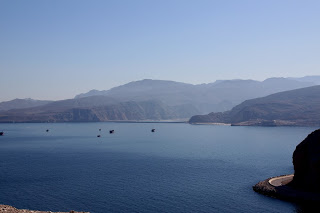
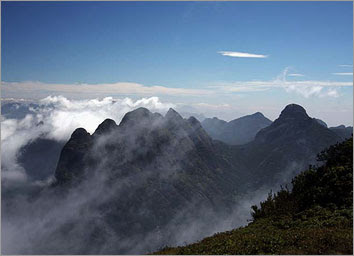
From a distance it looked like a thin gash along the mountainside. As I got closer, I realized that’s the dirt road that will take me up the mountain. Barely wide enough to accommodate one car and probably half a cycle at a pinch, the road ensures drivers stick close to the rocky mountainside rather than tempt fate by straying too close to the sheer drop on the other side. Halfway there’s a broad leveled area that provides sweeping views of the sea encircling the mountains as well as the chance to calm one’s jangling nerves.
The (thankfully) much broader but steep sinuous path down to the gleaming bay is a lesson in trying to look cool in front of co-explorers while attempting to disguise panicky yelps as yips of excitement. I drove steadily treating each bend in the road with the respect reserved for a Roman emperor. As I pondered about whether my white knuckles would go back to its former dusky glory, I felt the crunch of pebbles under my tyres. The gleaming blue bay was right in front. I switched off the ignition and climbed out of the car with the confidence of a man who could have done the drive blindfolded.
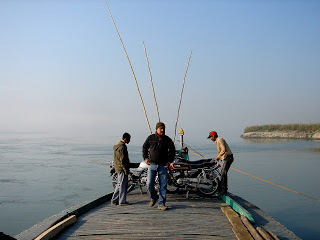
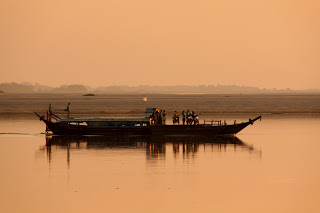
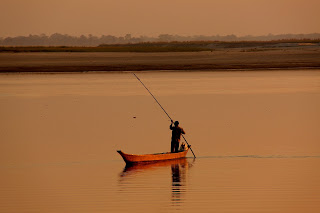
The Brahmaputra Crossing
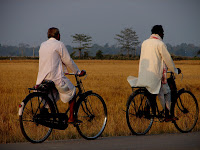
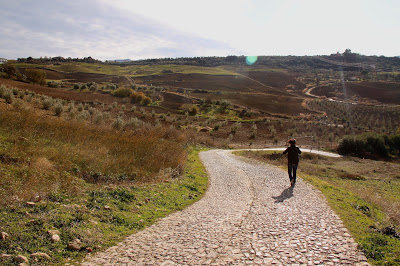
The Charm Of Long Walks
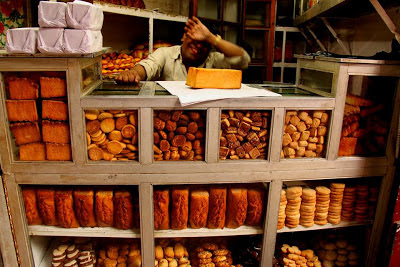
Biscuits from Mr. Biswas.
A good part of my growing up years was spent in salivating over the goodies of our friendly neighbourhood bakery, Kamrup Bakery in Guwahati - a veritable Alladin’s den of freshly-baked goodies, appetising aromas of which would waft out and encircle unsuspecting passersby and slowly but surely entice them inside the bakery. Various varieties of delicious bread (no brown, multi-grain or other pretenders). Cream rolls. Jam rolls. Sweet biscuits. Salty biscuits. ‘S’ biscuits (because they were shaped like an ‘S’). Birthday cakes (with icing so hard that a bite into one could induce slightly shaky milk teeth to get embedded in it. It had happened to a friend’s brother. Only once though.) Boiled cake (an Assamese special). Pastries. And much, much, more.
Everything would be stacked up or laid out in colourful neat rows. Samples would be distributed liberally to help in the crucial decision making process. Of course, the regulars would just have to step in and before one can say ‘Threptin’ their neat brown-paper packages would be waiting for them at the cashier. One fine day, they started preparing snacks such as singras (samosas), egg chops (pronounced as ‘sops’), and if memory serves me right, even chicken/mutton cutlets (minus the stuffy colonial club atmosphere where white-gloved attendants look down upon the non-regulars with practiced disdain). Life became much tastier. However, the inevitable call of ‘higher studies’ meant moving approximately about 3400 km away from Kamrup Bakery. Slowly but surely, like all pleasant memories of childhood, they receded gracefully to that special place where they wait patiently to be revived again. And revive they did when I was roaming around aimlessly in Bara Bazar, Shillong. The heady aroma of just-out-of-the-oven bread helped me sniff out Mr. Biswas’s modest bakery. A bit bashful (as evident in the picture), Mr. Biswas, however, had no qualms about lending me an attentive ear as I recounted tales of my favourite bakery. I asked him for a half-kilo biscuit pack. He happily packed a kilo of his best. And vehemently refused my money. We shook hands and I walked back happily. It always feels good to part on a sweet note with a bakery.
Next stop: Havelock Island
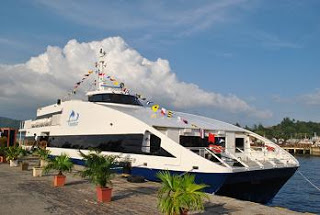
The Makruzz glided out of Port Blair harbour leaving in its wake local intra-island ferries, a couple of gleaming yachts, and many rusting heaps of floating scrap metal – boats that were damaged beyond repair. A chilling remainder of the 2004 Tsunami. The passengers settled down to watch a promotional film on the islands. Everybody was absorbed in the film except for the Flab Four who were chattering away like a bunch of monkeys with a serious case of ADD. I amused myself with fantasies of the four of them being made to walk the plank by the captain. And everybody cheers as each one of them jump clumsily into the sea. The entourage cheers the loudest.
I tore myself away from these cheerful fantasies and started concentrating on the film. I learnt that Havelock is the largest island in the Ritchie’s Archipelago, a chain of islands lying east of the Great Andaman, the main Andaman archipelago. I also learnt that whenever footage of indigenous Andamanese and Nicobari tribes were shown, people start sniggering and the word 'savage' was liberally sprinkled. It was more than a bit disturbing. A man in a recording studio located thousands of miles away tried to describe the charm of these islands in his best baritone. I must admit, he tried his damnedest. But it was a no contest from the very beginning. What would you look at? Images of beautiful islands on a TV screen. Or just glance out and see the same islands floating serenely past your window.
As the Havelock jetty came into view, the slightly comatose crowd roared into action. In time-honoured fashion, everybody rushed to the exit. After a few minutes of confusion, in which announcements were made that nobody would be kept behind on the boat to work as unpaid deckhands, we managed to disembark. I was just happy not to breathe the same air as that of the Flab Four.
Havelock’s beaches were named with great imagination. The jetty was at Beach No. 1. Our resort was at Beach No. 3, there was Beach No. 5 and one of Asia’s best beaches is Beach No. 7. Thankfully, better sense prevailed and the beaches soon came to be known by names that had decidedly more character than numbers.
Ranjan’s worries are not unfounded. But then that’s the curse of tourism. I just hope good sense would keep these islands maintain their idyllic status.
Simple and uncomplicated. Just like life should be.
It's a routine I wouldn't have any qualms getting used to.
Andamans Ahoy!
For a tribe who has inhabited the islands for thousands of years, I thought that the information was a bit inadequate. But also quite telling of the way they are perceived by the modern world. I spent some time looking at other photographs representing various other tribes of the Andaman and Nicobar Islands– the Onges, the Shompens, the Andamanese and the Sentinelese. Each of them followed a pattern similar to ‘The man from the Jarawa tribe’. A group in one. A couple in another. With a terse line describing their antec
The Red Sari
‘Delhi in January is cold’ – Shamsher Singh remarked looking at me shivering. A man with a fierce moustache and a turban big enough to keep a family of partridges warm,Shamsher and I were standing at Delhi Cantonment station waiting for a train. I wanted to tell him that these were shivers of excitement. Because we were not waiting for just any train.
I was about to embark on a 7-day tour of Rajasthan and Gujarat aboard the Royal Orient – a train that was made up of carriages that once belonged to the Royal Maharajas of Rajasthan and Gujarat during the pre-independence era. An era of excesses which included Maharajahs raising their own taxes, building magnificent palaces and of course, running lavishly appointed personal trains. After independence, the Maharajahs were brought down to terra firma when they lost their privy purses. The trains became financially unviable and were shunted away to various yards where they could rot in peace. However, some savvy spirit decided there was merit in sprucing up these carriages, string them all together and call it the Royal Orient – a train befitting modern czars, financial whiz kids, industry captains and the rest of their ilk.
We were making a documentary on iconic train journeys and it was just my incredible luck that I became a part of the team that was allotted to visually document the Royal Orient’s trip through Chittorgarh, Jaipur, Junagadh, Veraval, Sasan Gir, Diu, Palitana and Ahmedabad. We had our own carriage and our own personal butler, the man with the fierce moustache and oversized turban – Shamsher Singh.
The rest of the crew arrived at the station and Shamsher fussed around them. I observed him bowing before our director, Shuboda, a gracious ‘namaste’ for our anchor, a young ‘starlet’ Sneha, and warm greetings for Chauhan – the cameraman and Alex – the assistant everything. I couldn’t but help notice that a certain pecking order of deference was involved.
We got busy setting up the camera and equipment to capture the Royal Orient’s regal entry. And regal it was. A steam engine with huge gusts of steam billowing from the iron wheels emerged from the fog trailing carriages resplendent with royal emblems and motifs. Suddenly the station was galvanized into action. The Royal Orient staff in smart uniforms swirled around picking bags and herding passengers into their respective carriages. I almost felt like I was in a period film.
With a frisson of excitement, I quickly boarded our plush carriage - Jodhpur. Each carriage was a self-sufficient unit with four cabins (with monogrammed linen and painted frescoes adorning the walls), bathrooms, a pantry (Shamsher could make an omelette that could make a Michelin-star chef turn in his star) and a lounge with panoramic windows. Two dining cars and a well-stocked bar kept everybody happy.
As the Royal Orient made its steady progress to our first destination, Chittorgarh, yellow mustard fields, tiny hamlets with waving children and silvery rivers flashed past our eyes.
Chauhan got busy capturing the landscapes through his camera lens.The itinerary is planned in such a way that there is ample time to explore one destination during the day and travel throughout the night to reach the next destination.
We fell into a happy routine. Explore and shoot during the day. And then come back to the
Royal Orient by hopping on to the assigned bus/car and one memorable instance, a bullock cart. We swept through the Hawa Mahal, clambered up the Amber Fort, got overwhelmed by the Uperkot Fort, stared in awe at the magnificent Somnath Temple, held our breath as we came within pouncing distance of the majestic Asiatic lions of Sasan Gir and experienced a slice of 16th century Portugal in the pretty coastal town, Diu.
Our happy routine however got derailed on the fifth day of our journey. We were on our way to Palitana, a major Jain pilgrimage centre located on top of a hill. The pilgrims have to clamber up over 3000 steps to reach the 863-temple complex. All of us were sitting in the lounge planning the next day’s shoot. Sneha, a strict jeans and tee girl, had gamely agreed to wear a sari for the shoot. We were debating whether she should wear the sari after we reach the top or should we hire a palanquin to carry her to the top, when Alex brought out the sari that Sneha is supposed to wear. Sneha became very agitated when she saw the sari and exclaimed - ‘It’s red in colour! I cannot wear it!’
Sneha’s relative inexperience coupled with a slight attitude problem had given Shubhoda some tense moments throughout the shoot. Even though he was known to fly off the handle at the slightest provocation, Shubhoda was quite patient with Sneha, always coaxing and cajoling her to say her lines in a manner befitting the show. However, Sneha’s reaction towards the sari was the proverbial last straw. Shubhoda gave her a tongue-lashing that almost halted the Royal Orient in its tracks.
The most level-headed guy in the group, Chauhan, quietened Shubhoda. He
asked Sneha - ‘Any particular reason?’ Sneha whimpered – ‘My mother has told me never to wear red. Something bad happens when somebody in our family wears red’. From the corner of my eye,I could see Shubhoda turn a distinct shade of crimson. He burst out – ‘Sneha...you actually think I will compromise on my shoot because of your mother’s superstitions. I have had enough of this. Shoot starts at 7 sharp. I want you in the red sari by 6’. Sneha flounced out of the room. Chauhan asked – Shubho...maybe there’s a good reason why Sneha doesn’t want to wear red...come to think of it...in all these days...never once did she wear red.’ Shubhoda replied tersely – ‘ Don’t worry...we all know it’s just another tantrum.’
An early morning shoot means everybody has to wake up at the crack of dawn. I woke up to see a crimson hue suffuse the horizon. I stared at the countryside flashing by with bleary eyes while the rhythmic clickety-clack of the Royal Orient whispered seductively in my ears -‘sleep a little more...sleep a little more’. I remembered Shubhoda’s angry face from the previous evening. And it was as effective as a bucket of cold water. A brisk 15 minutes later, I was sitting in the lounge showered and ready for the day’s shoot. The rest of the team trooped in one by one. Shamsher got busy serving his esphesal chai, a concoction that made one feel ready for anything.
Shubhoda glanced at his watch and instructed Alex to check on Sneha, whose cabin was at the furthest corner of the carriage, just next to the pantry. A sudden cry made us all rush out to the passage. Alex was standing outside Sneha’s cabin and even from where we were standing; we could see that he was terrified.
We rushed to Sneha’s cabin. And found Sneha dressed up in the red sari. A bit puzzled, we all looked at Alex who was still staring at her with a transfixed look. Sneha was supposed to wear a red sari. Which she did. What was there to get so terrified about?
And then Sneha spoke. And it made our blood run cold. Because it wasn’t the voice of a twenty something woman. It was the quavering voice of an old woman who was speaking in a language which we have never heard before.
Alex spoke in quick bursts. ‘I asked her whether she was ready...she scowled at me...and then said something in an angry voice...I think she has cursed me...Chauhan...do something.’
Chauhan calmly stepped inside the cabin. Sneha whipped her head up, pointed her finger at him and muttered something harsh. Alex whimpered – ‘Look she’s cursing him also.’
Chauhan stepped back into the corridor. He said – ‘I think I understood a word or two.
It’s a very old Jaipuri dialect. Let’s call her mother. Sneha said she’s been asked not to wear red. I think her mother would definitely know why.’
A worried Shubhoda immediately called up the Bombay office and got the contact details of Sneha’s mother. He called her up and handed the phone to Chauhan.
I had met Sneha’s mother during the auditions. A quiet lady with a dignified air, she had stood silently in one corner of the studio as Sneha read out a piece. I hoped that she definitely had the answer to Sneha’s condition.
Chauhan finished his chat with Sneha’s mother. He said – ‘We need to make Sneha sleep. And get her out of the red sari.'
He paused, as if a bit unsure of what he’s going to say next. He cleared his throat and continued – ‘That voice that you hear is apparently Sneha’s great-great-grandmother. She has been terrorising various generations of Sneha’s family. Anybody who wears red gets possessed by her spirit.’ Chauhan paused and added – ‘She was killed in a family dispute by her husband’s brother. And she was wearing a red sari that day. That’s why, nobody in their family wears red’
A cold chill scampered up and down our spines. Shubhoda asked the very pertinent question as to how we can make Sneha sleep. Chauhan said – ‘Sneha’s great-great-grandmother loved kheer. We need to prepare a bowl of kheer and keep it next to her. Apparently, she cannot resist kheer. Obviously, we need to put something in the kheer that will knock her out for some hours.’
Shamsher immediately sprang to action. He instructed somebody in the kitchen to make some kheer. Luckily, there was some kheer from the previous night’s dinner. He got the kheer, handed it to Chauhan and said - ‘I have put something in it that will make her sleep.’
We didn’t think it was necessary to enquire what he had put in the kheer. His espeshal chai can revive even the most jaded spirit. We assumed he had access to stuff that could do the reverse also.
Chauhan gingerly stepped inside Sneha’s cabin with the bowl of kheer. Sneha looked up with dull eyes and let out a volley of abuses. Alex started muttering Hail Mary’s. I also couldn’t help but send out a prayer or two. Chauhan quickly kept the bowl of kheer on the dressing table next to the bed. I half-closed my eyes expecting Sneha...sorry Sneha’s long dead ancestor to grab him and do something horrible. But all she did was look at him and kept on muttering to herself. Chauhan stepped out into the corridor.
We stood there for what seemed like eternity. But it was actually just about 15 minutes or so. The shoot long forgotten, we were discussing in low voices what should be our next step. Palitana was still an hour away. And we couldn’t just stop in the middle of nowhere and go looking for doctors or whoever can appease angry ancestors. A sudden noise made us look inside the cabin. Sneha was sleeping peacefully on the bed. The empty bowl of kheer was lying on the floor, swaying gently to the rhythm of the train.
Shamsher quickly got a lady passenger and gave her some story about Sneha fainting because of exhaustion. Chauhan somehow convinced her to change Sneha’s red sari and made her wear one of her night gowns.
We soon reached Palitana. Shubhoda was more than a bit shaken. I guess he felt responsible for the entire incident. He said that he will stay back in the train. He instructed us to go and shoot Palitana’s temples. I was more than happy to climb 3500 steps then stay in the vicinity of Sneha’s aggrieved ancestor. We shot extensively and it was late in the evening when we returned to the Royal Orient.
We entered the lounge and saw Sneha sitting opposite Shubhoda. We greeted her warmly. Although we were a bit unsure of whom we were greeting. If I remember correctly, Alex even attempted a namaste. Sneha gave us a tired smile and to our great relief spoke to us as herself:
‘I guess I could have told you guys last night. But then I doubt anybody would have believed me. I was eight when the same incident happened with a cousin of mine. She had gone to a friend’s place and worn a red skirt. A family relative who’s well versed in the occult had instructed our family members never to wear red...not even during weddings. But of course, accidents like these happen.’
Sneha slept early that night. We were all sitting in the dining car as the Royal Orient glided to our last destination – Ahmedabad. A man of logic, Shubhoda was finding it very difficult to digest the day’s events. Alex and I were, of course, true believers in anything to do with the paranormal. All throughout the evening, we were jumping at shadows. Chauhan tried explaining to him. ‘Shubhoda...believe me...there are lots of things in the world that cannot be explained.’
Shubhoda was slowly warming to the idea that Sneha and her mother had pulled a fast one over us. ‘After all, she’s an actress. Although that was one bloody convincing performance. Didn’t think she had it in her.’
Chauhan suddenly got up muttering that he needs to get something from our carriage. He walked straight ahead. He paused at the connecting door and asked us whether we need anything. We replied in the negative too engrossed in Shubhoda’s theory about Sneha.
And then seconds later, Chauhan returns to our table from the opposite side of the dining car.
It took us a couple of seconds to register what happened. It was Shubhoda who spoke up.
‘Chauhan...didn’t you just go out from that door...how the hell did you get back from the opposite side. The train is going at full speed...we didn’t see you cross us again...how...how did you manage it?’
Bathed in silvery moonlight, the countryside flashed past our windows.
Chauhan poured himself some coffee and with a smile playing on his lips said:
‘Shubhoda...believe me...there are lots of things in the world that cannot be explained.’
For the record, the rest of the journey was uneventful. The film was completed in a couple of months. However, it was some time since any of the crew wore anything that was a shade of red. Including Shubhoda.
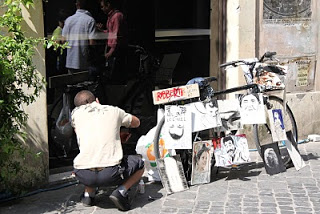
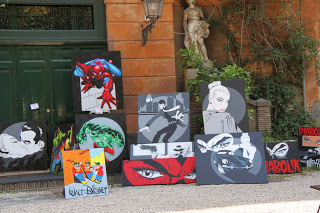
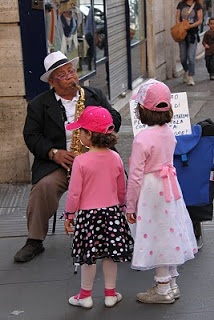
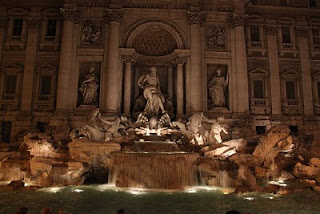
Under a Roman Spell
It was a fine morning when we drove out of the Leonardo Da Vinci Airport i
As we hit the hig
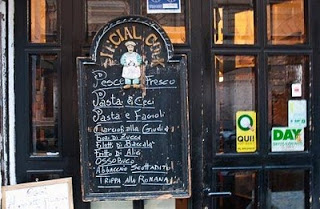
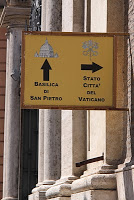
55 Euros later we were at Albergo Lucia. A homely little hotel within shouting distance of the Stazone Termini – Rome’s major transport hub (my companions had done their homework). Easy access to wherever we wanted to go. And there was no way that one could have got lost. Ah! You lost? Where are you staying – near Termini. Well then, hop on this bus/tram/metro. The last stop is Termini.
I immediately l
As it turned out, I spent a
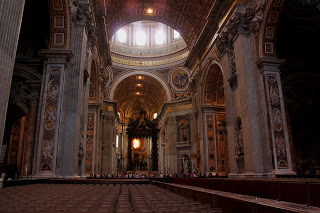
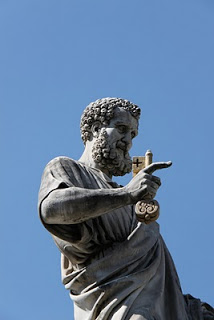
Rome symb
The Ladies Man
JP was also a much envied ladies man. His sharp wit could breach the sternest of defences. JP’s various amorous escapades were oft-repeated tales in the office. And during long journeys through the hinterland of India. It was during one such journey that I heard the most popular one.
On one such Sunday, as l
Seeing the panic-stricken expression on Savita’s face, JP started shouting ‘Fire! Fire!’ Savita looked at JP with a bewildered expression. JP rushed into the kitchen, grabbed a matchbox and lit some newspapers lying around. Thick acrid smoke filled up the room. Savita also started shouting at the top of her voice. Vilas grasped what was happening and quickly raised an alarm. The congregation downstairs rushed up the stairs with nary a plan. They were just about to break open the door, when it opened and JP and Savita stumbled out coughing and spluttering. With the straightest of faces, JP faced the crowd, kept a hand on Vila’s shoulder, suppressed a cough and told him: ‘Don’t worry, your wife is safe...and so is your house.’ The crowd as most crowds are wont to do chucked reason out the nearest window and started cheering.
Vilas, overcome with emotion, embraced JP warmly. The crowd again cheered lustily.
All of us burst out laughing at the tale. ‘And on top of everything, JP didn’t have to pay rent till he moved out’ – Alex, the camera assistant who hero-worshipped JP, couldn’t resist adding. Alex, JP and I, the assi
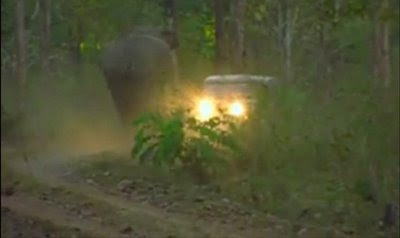
Madhu, the forest guard assigned to us was a bit jittery. And quite understandably so. He was driving a jeep on a route that’s frequented by a herd of wild elephants. That too, with a malfunctioning wireless set. Apparently, after sunset these wild elephants just plonk themselves on the dirt track and thereby declare the road closed to all and sundry. There have been a couple of instances when some foolhardy souls had dared to challenge the herd by honking incessantly to make them move. They barely managed to escape by the skin of their teeth.
We tried to lighten Madhu’s mood. JP told him – ‘Don’t worry, if elephants block the road, we’ll just turn back and head back to the village.’ Madhu countered this by saying – ‘On this track, if an elephant charges at us, you can be sure we won’t reach very far.’
That piece of information cut short the non-stop banter. Madhu glanced at us. I almost could see a pleased expression on his face. Something on the lines of - ‘now you know what I was worried about.’ The shadows started lengthening as we bounced along the track.
We entered a th
Madhu gently engaged the reverse gear. As the jeep lurched back, the elephant moved forward threateningly. Madhu stopped the jeep. The elephant also stopped. It was plainly evident that we won’t get far if she decided to charge us.
Madhu suddenly stiffened and started muttering oaths again. And this time his oaths included an entire family tree. We saw him staring fixedly at the rearview mirror. A massive tusker was standing quietly just a few paces behind the jeep. ‘That’s a full-grown male. And they can be really aggressive.’ We could have done without the additional information.
Terrified whispers flew thick and fast. From the obvious ‘Should we try blasting the horn’ to the ill-advised ‘Let’s scare the elephant by driving straight into it.’ Alex even volunteered the priceless information that a hive of bees can scare away elephants. He shut up when all of us just glared at him. JP was quiet the entire time. Finally he spoke. ‘Let me talk to her. I’ll convince her.’ All of us looked at JP. I was a bit worried. It’s not enough that we were stuck between two elephants in the middle of nowhere; we now have to contend with a man who wanted to engage in a dialogue with a wild elephant. Well, not strictly a dialogue. A monologue, maybe. But you get the drift.
We tried to dissuade JP. Madhu even quoted some statistics about how it’s not possible to outrun an elephant. JP just muttered a prayer and gingerly stepped out of the jeep.
The elephant spread its ears and came forward a few paces with its trunk curled. Madhu whispered to JP – Careful…it’s getting ready to charge. A bit unnecessary, I thought. One cannot be more careful while facing a wild elephant in the wild.
With folded hands, JP started talking. Earnestly. Fervently. It’s been many years but I still remember most of the monologue.
‘Dear Lord Ganesha, fi
JP finished speaking. The elephant moved a few paces forward till it stood just in front of JP dwarfing him. For a few tense moments, everything was quiet. Even the constant chirping of the crickets ceased. It was as if the entire forest was holding its breath to see what would happen next.
The elephant raised its trunk, trumpeted loudly and melted into the surrounding thick bush.
We looked behind. And just saw an empty road.
I have narrated this incident many times. On a flight. In a train. At parties. And once
And as Alex astutely observed, ‘Let’s not forget the fact that the elephant was a female.’
Guts, glory and Butterfly Valley
Welcome to Oludeniz or the Dead Sea, famous for its blue lagoon and paragliding
A gentle breeze playfully tugged at the road map from my navigator's hands as we pored over it. We are half-way to Butterfly Valley, home to the unique Jersey Tiger butterfly and located on the ancient Lycian Way, one of the ten most beautiful long distance hikes in the world. The directions seemed simple enough. First we head to the bustling harbour town, Fethiye, and then to Oludeniz. Then we take the Baba Dag Mountain road to Faralya where Butterfly Valley is situated. Far away from packaged sun-worshippers.
We had left our base Gocek (Go-chek, pop: 4000), and headed up, and down the mountain road to Fethiye. Being day 6, we were getting more than a bit familiar with the roads and within no time crossed Fethiye and entered Oludeniz, where we had the up, close and personal encounter with the paraglider.
A few queries and
But where’s the valley? As per the ma
“Oh, it’s right down. Head to George House (a very famous landmark) and then you can climb down to the valley.” – the lady driver answered. We stepped out of the car and walked to the edge of the road.
It was like a scene out of one of those epic films. A 70 mm spectacular aerial shot of a steep canyon leading to a lush valley with a
Then the penny dropped. And it was a rather long drop.
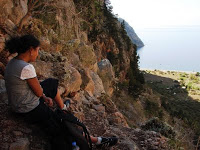
We were going to climb down the canyon... to the valley.
“Isn’t there any other way?” – I asked, not really confident of making that long descent.
“You can go back to Oludeniz and maybe catch a ferry to the valley.”
And that sounded a bit tame. That sounded like somebody who wears a suit to work would do. Safe and sensible. I looked at the navigator. She’s more than game. And I don’t wear a suit to work. The decision was taken.
We climbed further up and came to a little sign asking us to take a right for George House.
Parking the car
A genial young man volunteered – “Just walk straight down to the edge and you will see red markings on stones...follow the markings and you should reach the bottom in about an hour...it gets a bit tricky at times...but the ropes will help you.”
Well, there it is. Doesn’t sound too easy. Doesn’t sound too tough either. The ropes are there, after all.
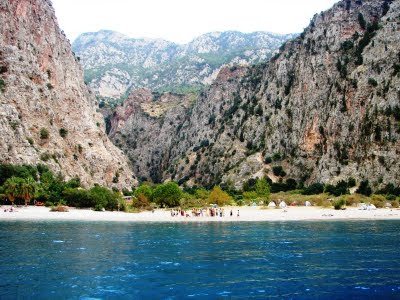
We walked past the farm exchanging friendly waves with other adventurous souls lucky to be camping in one of the most amazing locations that we’ve ever seen. The green valley cleaves the mountain in half and an aquamarine blue sea stretches far into the horizon.
The initial descent was easy. All that was required of us was to follow the markings, hold on to the rocks and be sure of where we step. Pretty wildflowers, the merry chirping of birds and a constant but muted roar of a waterfall kept us company. And then like a good James Hadley Chase novel, the plot thickened.
The climb became steeper. The footholds harder to find. Muscles and sinews started getting stretched to their limit. There came a point half-way (we assumed) where we actually thought about heading back. But it was a brief thought. We really didn’t fancy never looking into a mirror again. After checking our watches, we realised it was close to an hour and we are nowhere near the bottom.
Just when we thought the worst was over, the trail ended in a steep drop. No ungainly scrabbling
And then we got into our zone. Or maybe the ropes helped. We made pretty good progress on the final stretch. Arms (and legs) were starting to ache alarmingly. But with each step we were getting close to our destination.
It took us the better part of two hours to reach the valley. A strange yet comforting silence enveloped us. And there was a certain inner glow. It was almost around 5. It had struck us before that the only way back is to climb up the whole stretch again. Or catch the last ferry to Oludeniz. We had considered this eventuality as we had followed the progress of a fer
There’s a small community of organic farmers in the valley - mainly backpackers who pitch their tents for weeks on end. They help out with the farming
A well-trodden path took us to the beach we first glimpsed from the top of the mountain.
A
It looked like we had timed it to perfection. The tall, bearded captain of the Kelebek Vadisi (Butterfly Valley) told us that he’s hauling anchor in five minutes. His dreadlocked second-in-command sounded the foghorn a couple of times for good measure. A motley bunch
As the ferry drifted away from the shore, farewells were shouted and promises to meet up for lunch in Barcelona, dinner in Goa and breakfast in Ko Phi Phi were exchanged.
We craned our necks for a last lingering look at Butterfly Valley. A man sitting on a makeshift bench of life-jackets said “Don’t worry, you’ll be back”.
We nodded knowingly.
Next time we will just paraglide straight into the valley.
A tale of a Goan lobster.
As I drained the last of my celebratory drink, I came to my senses. Half of my salary had already been accounted for in the form of previous loans from understanding friends.
But I was determined to escape Bombay at any cost (metaphorically speaking, of course).
Goa was a unanimous decision that satisfied both my heart and the remnants of my bank balance. I felt a bit like Shackleton (definitely in spirit)... scale…well) as I planned my mother-of-all-shoestring-budgets three day Goa expedition. My guide - a Lonely Planet with half of South Goa missing (which sort of decided that I’d ‘do’ North Goa….Calangute… Baga…here I come).
Friday took its own sweet time coming that week. As the Madgaon Express whooshed to a stop at Dadar station, I
And thus began my…well…Goan voyage, standing next to a disconcertingly large ‘bubble wrap’ package, swaying to the rhythm of the train.
As Panvel rattled past, Mr. Stocky Gentleman decided to get chatty. “Patil, senior constable, Charni Road police station…you from Nepal?” – An obvious reference to my pan Asian ‘chinky’ good looks.
“Assam…North-East”- I mentioned helpfully. “Ah…Assam Tea…”- Patil smiled. I nodded with an agreeable smile. Patil rattled on like a 6:45 Virar fast -“Assam is capital of Darjeeling; I’ve seen photos…so you make tea with Yak milk?”
Sensing that geography is not really one of Patil’s strengths, I steered the conversation to less choppy waters. Bollywood should be good, I thought.
Brilliant was more like it. Patil was stationed for two years in Bandra. A fact that automatically made him a buddy of Sallu Bhai (had invited him over for home-cooked biryani) and Sunju baba (almost did a small role in one of the M.B.B.S films at his behest but didn’t get leave…a jealous senior was the culprit apparently). An innocent remark had obviously opened a floodgate of memories.
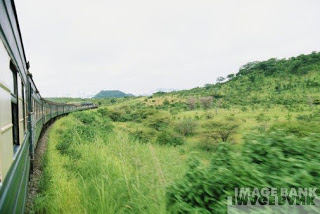
Thankfully, the rhythmic effect of iron wheels gliding smoothly over wooden sleepers soon resulted in Patil emitting gentle snores with a smile playing on his lips. And with a huge sigh of relief, I started concentrating on the lush Konkan coast whizzing past.
As the stations trundled past with metronomic regularity, the Lonely Planet descriptions started coming to life. It started to drizzle as soon as we left Chiplun and by the time it reached Sawantwadi, the drizzle became a downpour. I woke up Patil and saw him off amidst a shower of abuses aimed at the unfortunate porter who had the gall to drop his luggage while clambering down the steps. He did however pause for a moment to shout out an invitation to visit him at his station.
I had barely settled in the recently vacated seat, when a pock-marked ‘Welcome to Goa’ sign flashed by. With a quickening of the pulse, I drank in the scenery. Swaying palm trees whispering to each other. Boats with tiny figures perched delicately on the bows gliding down rivers swollen by monsoon downpours.
A station with the demeanour of a Sunday churchgoer loomed ahead. Tivim station, like many small stations, had a comfortable air around it. Like those rare breed of people who disarm strangers with a welcoming embrace/smile and immediately make them feel at home.
“Take a bus to Mapusa first, and then from Mapusa take another bus to Calangute”. Instructions cannot get any simpler.
Mapusa bus station was a melee of shouts. Shouts of “Vagator…vagator…vagator” would quickly be overtaken by a fresh entrant shouting “Anjuna…anjuna…anjuna”…the buses would all the time threaten to take off any moment with sudden lurches. In sharp contrast, the passengers would sit in stoic patience, having experienced enough of this daily pantomime.
I clambered on board before the conductor could shout “Calangute” twice. A sudden gnawing reminde
As I cavorted merrily with fantasies of being introduced to the likes of Mackerel Rechado and Pork Vindaloo in their natural habitat, the bus deposited me at the bustling Calangute market. “Where’s the beach?” was a common question I guess. A few minutes of walking down the bustling road brought me to the steps leading down to the beach.
A sudden whiff of something delicious made me make my first acquaintance with Souza Lobo. The gaily lit restaurant convinced me that it’s out of my budget. A second whiff convinced me that budgets can be stretched.
The glowing lamps on the tables set right on the beach drew me like the proverbial moth. As I eased into one of the wicker chairs, a waiter materialized out of nowhere. Immediately sizing me up (as a slightly weary traveler, I must add …not as a rich tourist…there’s a difference), he flashed me a friendly smile. I briefly toyed with the idea of just ordering a lemon juice to refresh me and then maybe find something more in tune with my budget. But somehow the warm welcome emboldened me enough to ask Angelo (as his name tag proclaimed) about the ‘dinner special’. “I’d recommend the Grilled Lobster, Sir…it’s the Chef’s special tonight.”
Now the only time I had come face to face with a lobster previously was when I was proof checking a menu of a five star hotel. A fancy description (where I found two typos) was followed by an exquisitely detailed food shot of a huge grilled lobster resting on a bed of crisp lettuce. I remembered almost drooling over it.
The flame inside the little lamp on the table weathered the cool sea breeze with practiced ease, dancing around and casting tiny patterns on the checked table-cloth. The waves lapped at the shore gently. “No woman, no cry” was emanating from a shack further down the beach. I settled back further into the chair, buried my toes in the sand and ordered the ‘Chef’s Special’ without even a single glance at the right hand side of the laminated menu directly under my nose.
There’s something about the Goan air. Makes one feels rather contented. And rich.
The Prince of Gauripur & Glory Cinema.
Circa 1989, Guwahati. My winter vacations were on. I was in the throes of adolescent angst and found fault with everything starting from the venerable Assam Tribune’s editorial pieces (justified) to our cook’s fish curry (unjustified). My aunt came down for a visit, empathized with my state and whisked me away to her place in Gauripur, a small town in Dhubri, a far flung district of Assam bordering West Bengal.
My cousin, Bijoyda, was overjoyed to see me. Almost shunned by the family for his inability to be stable (read: finding a job) and regarded by the neighbours as a harmless directionless odd ball, he saw me as somebo
We quickly fell into a pattern. After breakfast, we’d head out to Gauripur town on Bijoyda’s temperamental Bajaj Sunny. A bumpy 10 minute ride away through paddy fields, Gauripur was the eastern version of a Wild West town. There was one main potholed road lined with shops such AtoZ tailors (peak season-Durga Puja), Star Restaurant (where one can celebrate joys with jalebis and drown sorrows in cups of masala chai), Salim & Sons Saloon (it’s another thing that Salim had five daughters but he never stopped hoping), and last but not the least, Gauripur’s pride-Glory Cinema (where the L had dropped off).
Glory Cinema was where Bijoyda came into his elements. Bhaskar, the star-struck manager (overweight, constantly perspiring with an incurable fondness for manikchand and ribald tales) was in awe of Bijoyda’s
Bijoyda once saved Bhaskar from a potential sticky situation. Just bef
Conjuring up images of him being beaten up like a film baddie, he sought out Bijoyda. Quickly assessing the situation, Bijoyda told him to make an announcement that the public would get to see the first half of the new movie till the interval and then see the last week’s movie’s climax (the reels of last week film were still there). Basically two movies for the price of one. And there would be a special show of the remaining part of the first film next day free of cost.
Fearing the worst, Bhaskar made the announcement. And the public responded with hoots of delight. Nobody really cared that they need to come back again next day to see the remaining part of the film again. The free show (for which they had already played) was all that mattered.
Bhaskar in an emotionally charged moment christened Bijoyda as the ‘Prince of Gauripur’ and ordered jalebis from Star to celebrate his close escape.
(For the record, the film shown after the interval was a dubbed ‘educational’ Tamil film starring Silk Smitha.)
After a couple of weeks, I returned to Guwahati. I quite missed the sessions with Bhaskar and Bijoyda. Soon after, I heard that Glory Cinema was demolished. I wondered what happened to Bhaskar. I lost touch with Bijoyda after shifting to Pune for what elders used to term as ‘higher studies’.
It was many years later when on a visit to Guwahati, I chanced upon an interview in a local TV channel. The producer-director of the latest Assamese hit film looked extremely familiar. It was none other than Bhaskar. I watched fascinated as Bhaskar spoke eloquently about the dynamics of making a successful film. “The main soul of a film is the script and my film’s success is entirely because of my writer” as Bhaskar made this statement, the camera panned to the writer, and I almost fell of my seat.
Bijoyda looked quite fashionable in the quintessential garb of a film writer.
The distance from Gauripur to Guwahati is only about 300 kms. But it sure felt good to see how far these two friends have come.
Musandam Musings
Famous as the Middle Eastern version of the Norwegian fjords, Musandam is characterised by mountains that rise straight out of the sea. It's only the extremely skilled or the foolhardy who would attempt to drive through that region late in the evening. I decided to classify myself as the former. Maybe the full moon had a hand in the decision.
It was about 9pm. I had dropped off a friend off at Ras al Khaimah (one of UAE’s northern emirates bordering Oman) and was driving back to Dubai. Suddenly, it struck me that the border was less than 50kms away. And beyond that was Musandam.
The UAE border guards found it a bit funny that I was travelling alone. I muttered something about finding myself. They tried to be helpful...in their words..."drive safe...road going up and up...and down and down". One of them helpfully added "if lost way, drive straight, and stay at Golden Tulip". The last mentioned name was a familiar name. It was a resort frequented by either the extremely skilled or the foolhardy.
With a spring in my step, I retraced my steps back to my car. The twists and turns of my descent would have given a major complex to a Le Carre plot. Soon I could see the lights of Golden Tulip resort drawing near. The road now lit up by halogen street lamps creating their own patterns on the craggy mountain faces. Hauntingly beautiful.
Golden Tulip's lights looked very welcoming. I glided into the parking lot without much ado. I was greeted by the ever smiling Mr. Issa, Manager (Reception). Mr. Issa looked a bit like Snape (remember Potter's philosopher’s stone) except he looked like he does unspeakable things to pretty French maids (and they like it). I was informed that they did have a room available. Except that I've to pay through my olfactory glands. Which wasn't exactly part of the plan. But then, here I was in a foreign country and had no idea where the next bend will lead me to. So, in spite of having a tent in my car, I decided that I’ll opt for the room. And with that came the realization that I am becoming well...old. In my heydays, I’ve slept in a truck, in a cave, in a... ...you get the drift.
As the sun finally decided to call it a day and disappeared to its secret location somewhere over the horizon, a deep sense of calm came over me. After a last lingering look, I changed gears and headed towards city lights.
Jigneshbhai's 'excitement'...
My friend, Aamir, was (is?...lost touch with him) one of those small time ad filmm
5pm was the des
Jigneshbhai finished his monologue and bared his teeth at me. I bared mine at him. Societal norms over, we got down to business. "So, you are writing the script for me!" I muttered something. Aamir shook his head up and down. "Dekho bhai...ekdum simple...my product is for men...who (here he paused...looking around)...need something to get them excited. And keep them excited. ..." I nod understandingly. "I trust you have something good for me...now tell me your story."
I began my 'story'. Film opens on a typical pre suhaag raat scenario wher
Cut to next morning. The door opens and we see an old couple dressed in bridal finery step out smiling at each other coyly.
Cut to pack shot. MVO: SX capsules. Pyar karo lambe samay tak.
Jigneshbhai grunted. He looked at Aamir, looked back at me, and started having my bun maska.
I held my glass of now lukewarm chai with a steady hand. He's not going to deprive me of this at least.
Jigneshbhai polished off the bun maska, blew some crumbs off his shirt and declared "Story accha hain...but there's no male-female excitement you know...my audience wants to see what will happen after having SX capsule..." He looked at me with a half smile playing on his lips..."You haven't shown the excitement".
Right on cue, a popular Anu Malik number started emanating from his Nokia. Jigneshbhai started barking. The call was obviously of great importance. He got up abruptly, nodded his goodbye and walked out, leaving me staring at the remnants of my breakfast cum lunch.
Aamir made some symphatetic noises and gulped down my chai.
I got a call from Aamir a few days later. Jigneshbhai has a 'story' with lots of 'excitement'. He
I just won't order anything.
The movie finished much sooner than expected. My restless friend, an exchange student from the U.S. of A (let’s call him Andrew) wanted to go somewhere. Did not let me enjoy the movie in peace and wanted to leave even before the credits had started rolling.
We came out of Regal.
Andrew started whining – Let’s go somewhere.
I told him – We would go somewhere.
Where are we going?
Lohegad fort.
A real fort?
I really didn’t think the last question merited an answer
Caught a cab to CST (formerly known as V.T.)
Checked the train timings-Pune Passenger at 11:40 pm.
Checked my watch – 11:38 pm.
Two whole minutes. A lifetime actually.
Bought tickets and dashed into the nearest coach (the train had started moving), straight into a tangle of assorted arms and legs.
We made ourselves comfortable on the floor. Andrew being 6 ft 2 and almost as broad couldn’t help complaining about the space available. And then he asks me what he felt was a pertinent question.
Will I have to walk much?
Another question which did not merit an answer.
After sometime, I got up and stood by the door. There is something extremely liberating about watching the countryside flash by in moonlight. A solitary light or two, a sky awash with stars and the clickety-clack of the iron wheels. All combine to produce a very soothing effect. Perfect for smoothening nerves frayed by the daily wear and tear of living in a metropolis.
Around 4 in the morning, we crossed Lonavala. Woke up Andrew who was liberally sprawled all over, his head resting on the foot of a co-passenger equally dead to the world.
Wish I had a camera to record this for posterity. West finally at the feet of East.
10 minutes later, we reached Malawli, where one has to get down to proceed to Lohegad fort.
Malawli is a station, which lovers of English literature would have termed as quaint. A station without any aspirations. Just content to watch the express trains thundering past.
Hope it remains that way.
What was welcome was that there was a tea –stall and it was open.
If the owner was surprised to see two guys, one wearing quite a loud Hawaiian shirt
(not me) lining up for tea at the crack of dawn, we sure didn’t see any reaction.
I couldn’t resist asking.
How come you are open so early?
Woke up early.
Now, what does one say to that.
After fortifying ourselves with piping hot cups of tea, we again started out.
I told Andrew that while we trek to the fort, just keep an eye for the sunrise.
He gave me quite a disdainful look- I have seen quite a few sunrises.
Half an hour later, he was getting quite poetic.
A brilliant reddish sky interspersed with streaks of blue. A bracing breeze. The kind of breeze that clears the cobwebs and makes your reasoning crystal clear.
And somehow make you feel that you can be a poet.
The path ahead (I am being quite generous using the word ‘path’) was lined with stones and rocks. Andrew’s shiny shoes were taking quite a beating. But somehow he didn’t seem to mind at all.
We started climbing. Pausing every now and then to splash water on our faces from the numerous little waterfalls. The breeze became stronger. The chirping of birds became more pronounced.
Its good to feel alive every now and then.
The railway track has now started looking like a toy track amidst myriad green patches.
Hotel Lohegad came up. A reception committee of two goats and a dog greeted us, followed by the proprietor who happened to be the rest of the staff as well.
Half an hour, we emerged from the shack, sorry, Hotel Lohegad, sated and rejuvenated.
Maharashtra is dotted with more than 170 forts. The tableland atop the Western Ghats was quite suitable for building these forts. All these forts were self-sufficient and had large reserves of fresh water.
One of the major causes of the overwhelming success of the Maratha Empire can be attributed to these forts. Apparently one of the main reasons of Aurangzeb becoming prematurely bald was because of his inability to conquer the forts as and when he wanted. Obviously you won’t find this in any history book.
Lohegad loomed defiantly ahead, surrounded by clouds, as if suspended in mid-air.
We reached the village at the base of the fort.
One of those friendly nondescript villages, whose name one tends to forget immediately after asking.
The final stretch. We started climbing the flat stone steps.
It never deserts me. The feeling of stepping back into time. Half expecting to see soldiers suddenly come rushing out from some secret hiding place, yelling and shouting.
But there is only the wind now.
We reach the top. A brilliant shade of green greets us.
The view from the top, to put it mildly, is stupendous.
One can see for miles around.
On a bright clear day, one can even see Sinhagad fort, located about 25 kms from Pune. Legend goes that messages used to be relayed from one fort to another using mirrors.
We lie down wearily, luxuriating in the warmth of the sun.
A defiant drop of dew still glistened on a blade of grass.
An azure sky right above us.
Life is just perfect.